We begin
with a conversation

Commissions
Starting at $12,000
Not every piece starts with a client. But when one does, everything changes.
A commission with me is not a furniture order. It begins with an inquiry I review carefully. There is no finish menu to choose from, no predetermined blueprint passed between hands at the start.
The design resolves through listening to the wood and to you — and when it does, it’s documented with intention. What follows is the making: your story and the wood’s history finding each other in the same surface.
The wood I reach for already carries something. It has been through difficulty and kept growing. So have most of the people who commission my work. That parallel is not accidental. It is the whole point.
Each commission receives my full attention. I take a limited number of commissions each year to ensure that.
How It Works
The Process
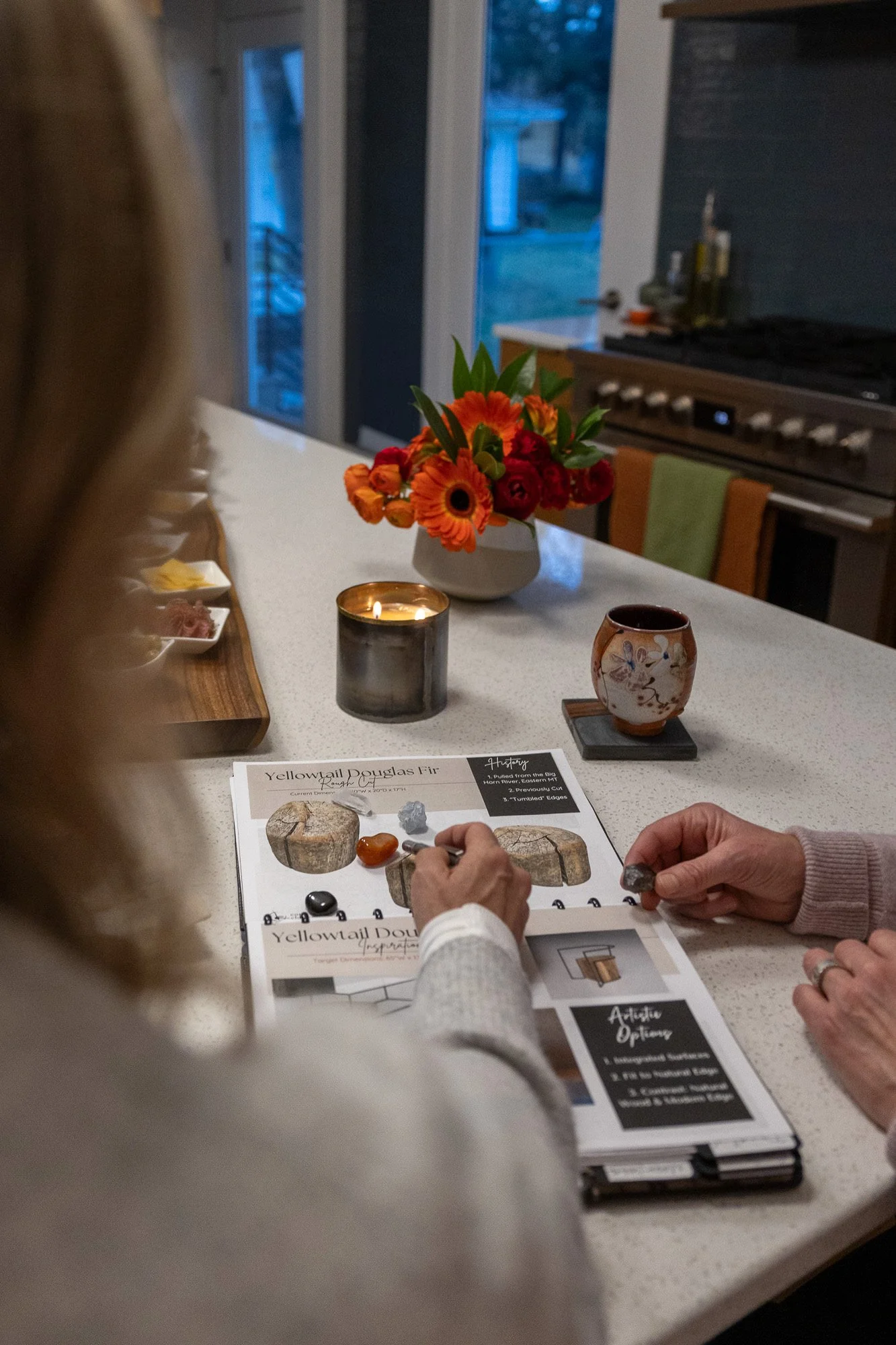
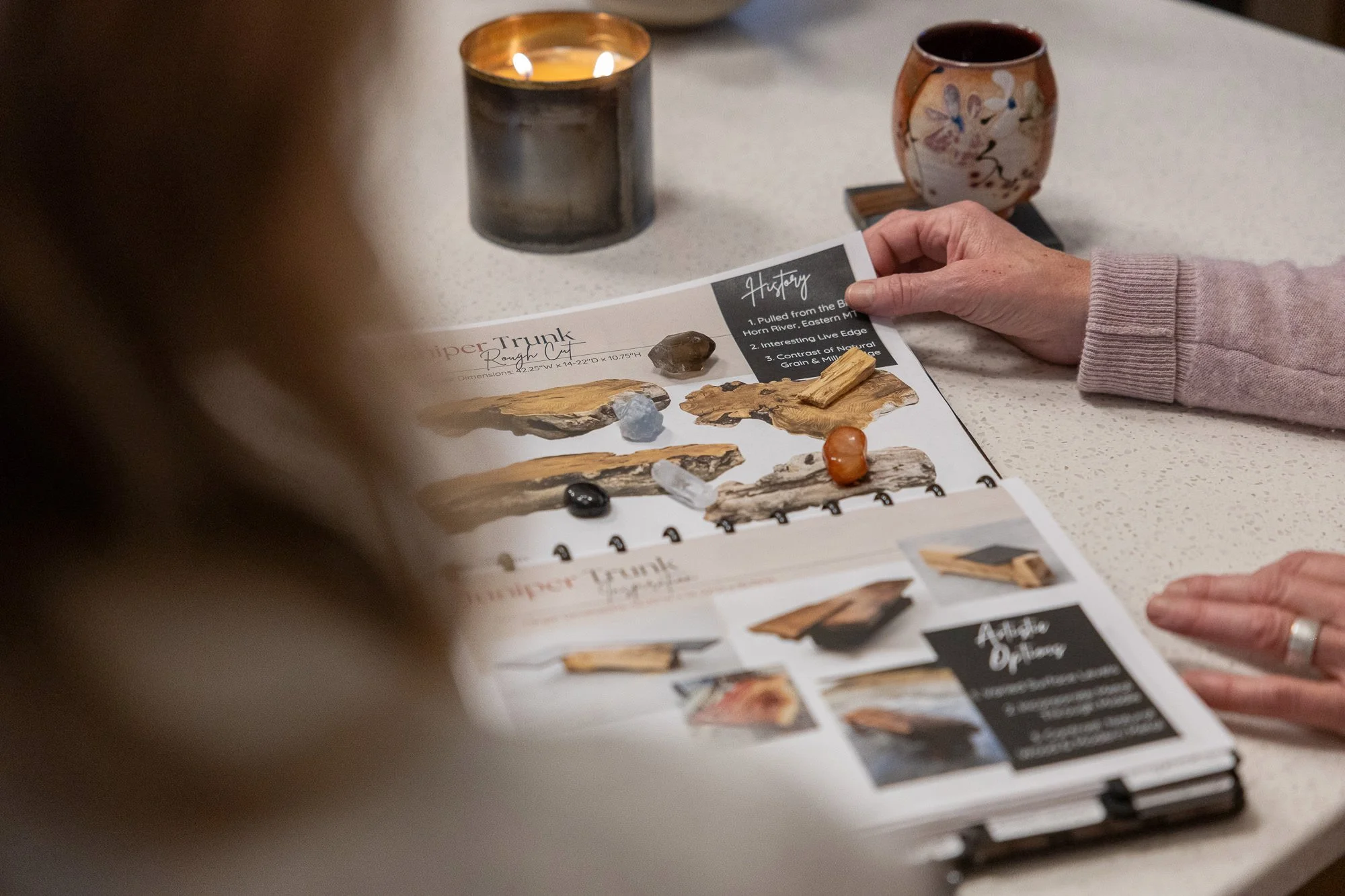
A commission moves through eight phases — from finding the right material to the moment the piece arrives in its room. The design emerges from the wood and from what I learn about you, not from a predetermined form. Your input shapes the beginning. Once production begins, I follow the material.
At select moments — depending on the piece and the relationship — you may be invited into the studio: to choose the wood, to witness the resin pour, to make a key decision at a point where the work can still move in more than one direction. These are not standard steps. They are rare offerings, extended when the moment calls for it.
Investment
Selective commissions begin at $12,000.
Pricing reflects the material’s provenance, the complexity of the design, and the depth of the commission relationship — not hours logged. A piece made for one person, one space, one story, is worth what it carries.
A Note on Fit
I work with a small number of clients each year — people drawn to mountain modern spaces, to materials with a documented history, and to the idea that an object can hold something more permanent than its function.
If you have been looking for a long time and haven’t found it, that is usually where this begins.
Commission inquiries are reviewed on a selective basis. To begin a conversation, reach out.
The Process
EXPLORE
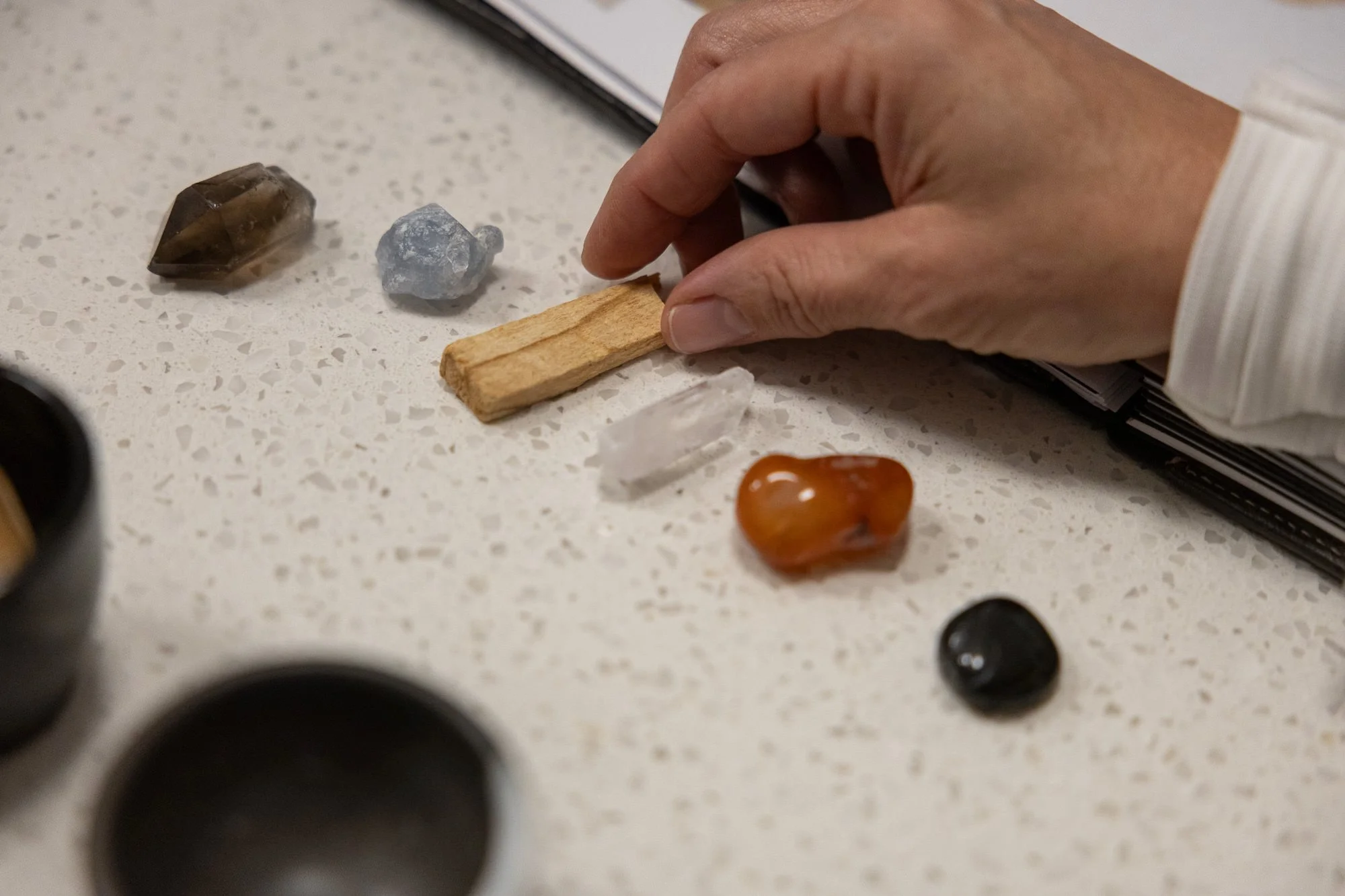
Onsite or Virtual Discovery. We begin with a conversation to explore your space and your needs. This step is about more than logistics—it’s about understanding how you live, and what matters to you.
01
IMAGINE
Concept Development & Design Approval. I’ll prepare an initial tailored design concept featuring inspiration photos, material ideas, target dimensions, and initial sketches. A design deposit is required for detailed drawings and project estimates.
02
CREATE
The Dance Begins. Once the concept is finalized, a contract is signed and a 50% deposit is required to start. Materials are sourced and creation begins. Updates are provided along the creative journey.
03
TRANSFORM
Functional Art that Holds Your Story. Once your piece is complete, we’ll coordinate delivery or pick up. The piece becomes a daily touchpoint — a reminder of what anchors you, as you move forward into whatever comes next.
04
The creation process is as important as the creation
I hold the material and the intention with equal weight, remain open to what the wood reveals, and trust that something true will emerge.
FAQs
-
I am fortunate to be surrounded by custom reclaimed lumber yards & saw mills such as Montana Reclaimed Lumber-North Yard, Big Timberworks, and the Good Wood Guys with friendly, Montana-focused teams that value sustainability and unique specialty woods. I am also pleased to source urban reclaimed desert hardwoods from the great team at Apple Blossom Woodworks in Arizona.
My preferred hardwood is Walnut because of its beautiful, warm color and grain variation. For creations with lighter coloring, I gravitate toward Elm and Hickory. And the dessert hardwoods of Acacia, Mesquite, and Sissoo/Indian Rosewood offer such intricate variations.
Because I am obsessed with character-filled reclaimed live-edge or hand-hewn wood, I am often fortunate to have “Dakota Piles” accumulate here and there. These assortments of unique wood are set aside when the twisted or void-marked piece just doesn’t fit the normal construction mold but is laden with way too much character to send to the burn pile.
And, “Dakota Piles” exist because of the genuine people at the lumber yards who also have a passion for reclaiming a piece of history. I am so grateful!
-
While I have tried numerous metal patina techniques, I prefer the minimalist look of black steel – so I gravitate toward powder coating for a clean look with long-lasting protection.
The crew at Powder Coating of Montana has been such a reliable source for my favorite matte-black finish.
With that said – special orders with a splash of color or a patina finish are possible, but require a longer timeline.
-
I use Rubio Monocoat hardwax oil wood finish, which is an extremely durable finish and enhances the natura beauty of wood furniture.
For best care, the golden rule is “less is more”. A damp cloth is usually all you need, and only when necessary. Make sure to wipe the surface dry to prevent water from sitting on the table surface.
Rubio Surface Care Spray or properly diluted Rubio Monocoat Soap are the only recommended cleaners for your Rubio finished furniture. These cleaners will remove all dirt and grease without leaving a film or affecting the natural look of the wood.
Although Rubio Monocoat finish is very durable, the use of coasters and trivets are highly recommended. Some of the most damaging things to wood furniture is direct heat, cold, and moisture. Thus, I always recommend using trivets, coasters, and placemats when possible, to extend the life of your solid wood furniture.
-
As an artisan and solopreneur, I am committed to creating sturdy, robust furniture that is built to last. I take pride in my craftsmanship and guarantee the structural integrity of my solid wood furniture, including joints, hardware, finishes, and workmanship. This commitment to quality is extended to the original purchaser and is non-transferable.
It is important for the client to be aware that reclaimed wood has natural variations in color, grain and texture (ex. knots, nail holes, insect tunnels, etc.), which are not considered defects. Solid wood naturally expands and contracts due to variations in temperature and humidity. This movement may result in minor cracks, gaps, or separation in the wood. These are all part of the natural behavior of wood and do not constitute a defect.
Additionally, while I use high quality finishes to seal the wood and UV-resistant epoxy resin, it is important for the client to be aware that resin can yellow or discolor over time, especially when placed in direct sunlight.
“Since bringing the set into my home, the energy of my space has transformed. It feels more me. There’s a quiet strength and natural elegance that these pieces bring, reminding me daily of the power of artistry rooted in authenticity.
If you’re looking for something more than furniture - something that resonates with your soul and transforms your space - I can’t recommend Dakota and Core Elements Studio enough.”
- Cammi S.
The People Behind the Piece
-
![]()
A Reflection of You
-
![]()
"Art is Not What You See..."
-
![]()
An Introduction of Old Friends
-
![Core Elements Studio Client]()
The Mark of Something Real