The Mark of Something Real
There is a lifelong habit I can't shake — noticing potential in what others seem to walk past.
The piece of reclaimed wood at the bottom of the pile, seemingly beyond its usefulness — is the one I reach for.
This creation began differently.
The wood was already chosen. Simply waiting to be re-discovered.
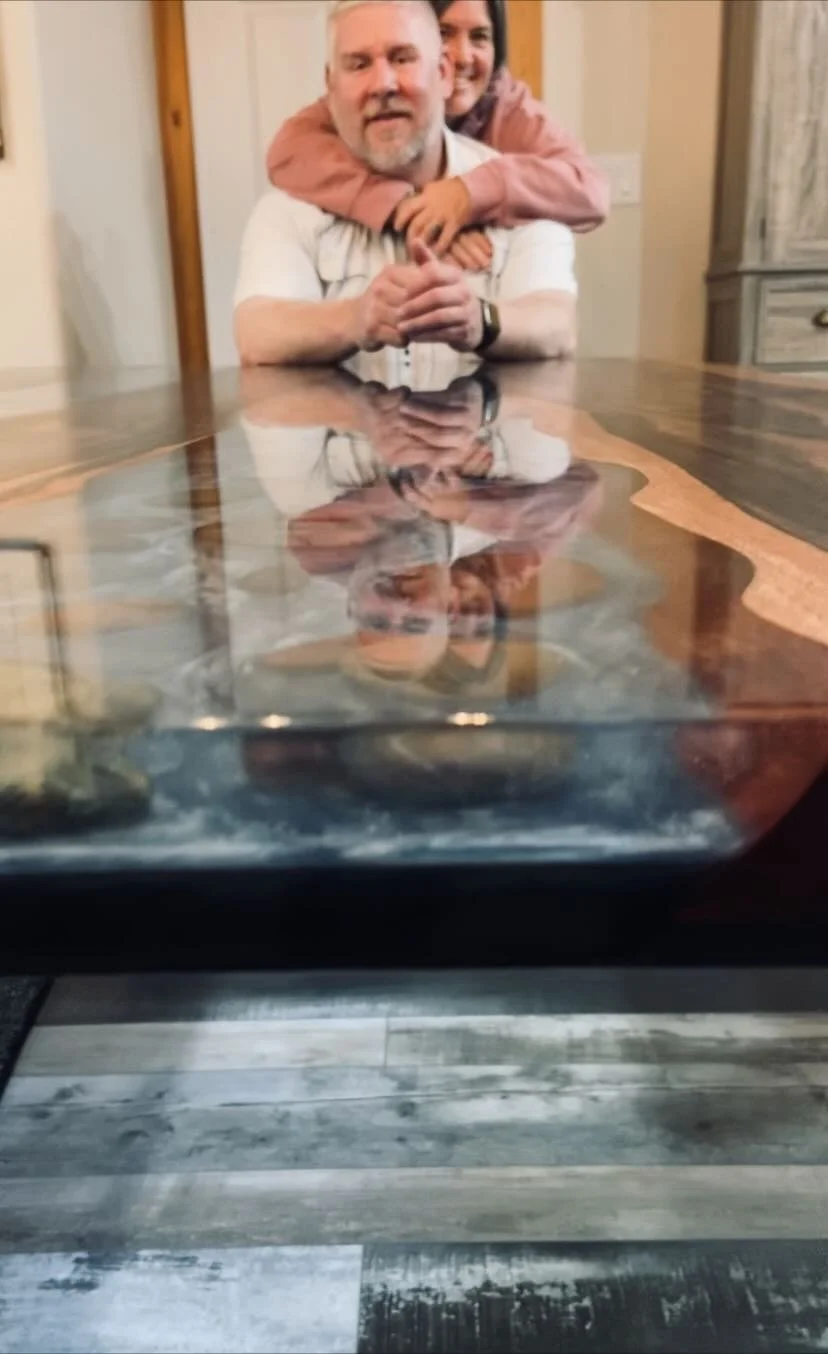
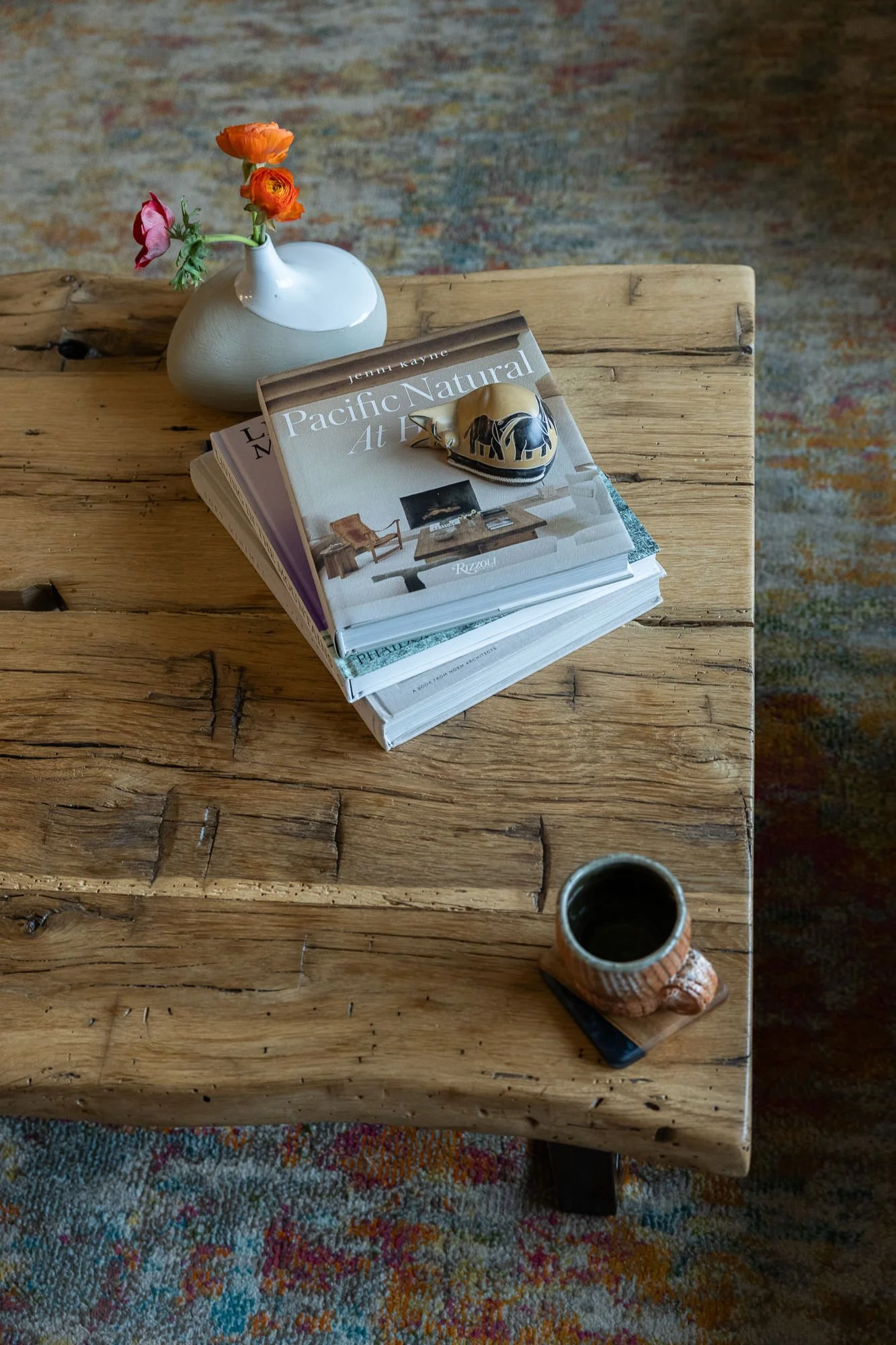
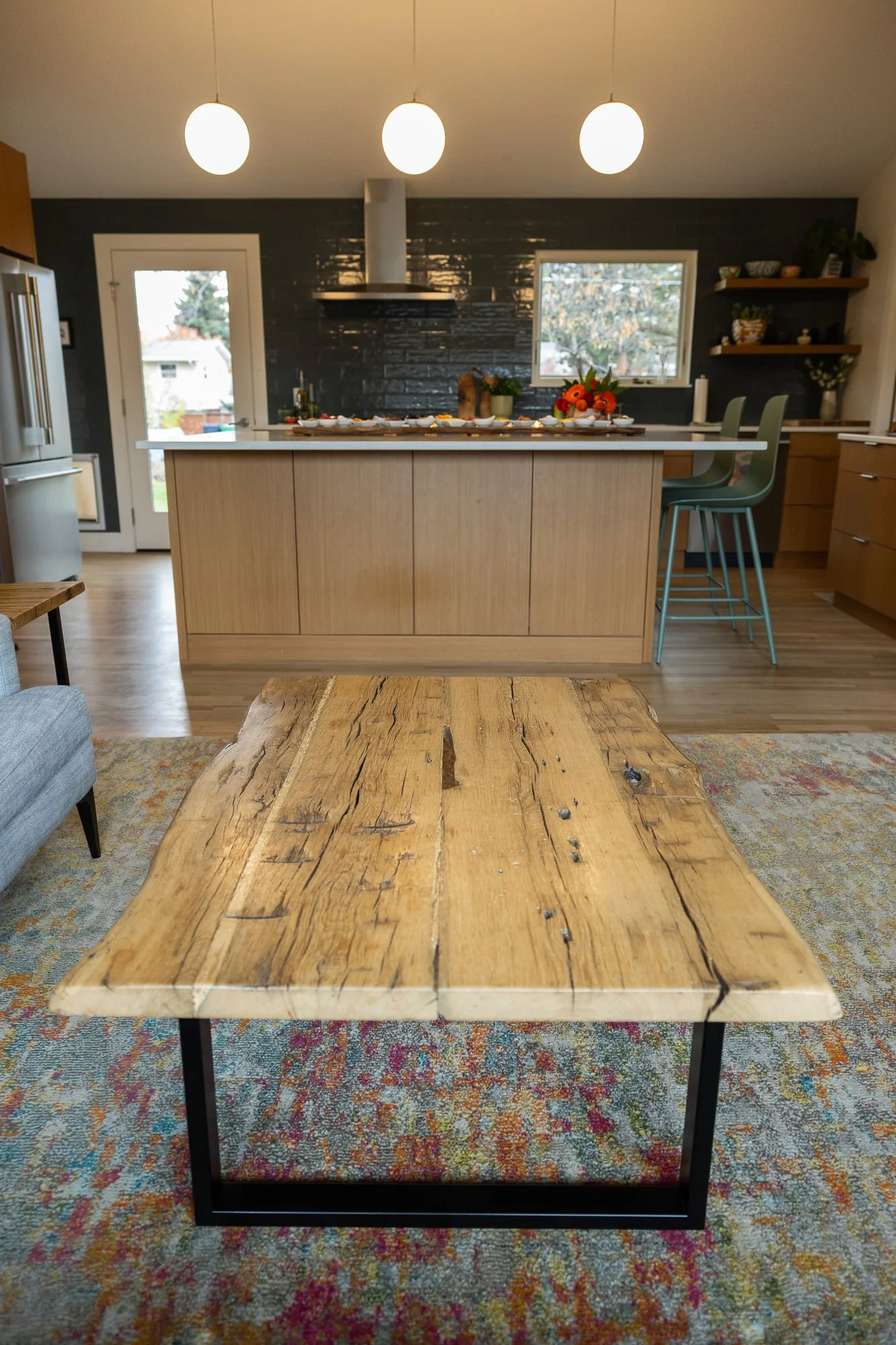
Several reclaimed beams, rough-cut and heavy with history, that Stacie and her husband, Cary, had found years before were patiently waiting in their shed.
Stacie and Cary didn't know exactly what the reclaimed slabs might become. They only knew they were worth keeping.
They carried the marks and character of something real. Perfectly imperfect.
Reading What’s Already There
I've known Stacie for years — first as a graduate school classmate, then as a trusted colleague for decades, and now as someone whose work I watch with genuine admiration.
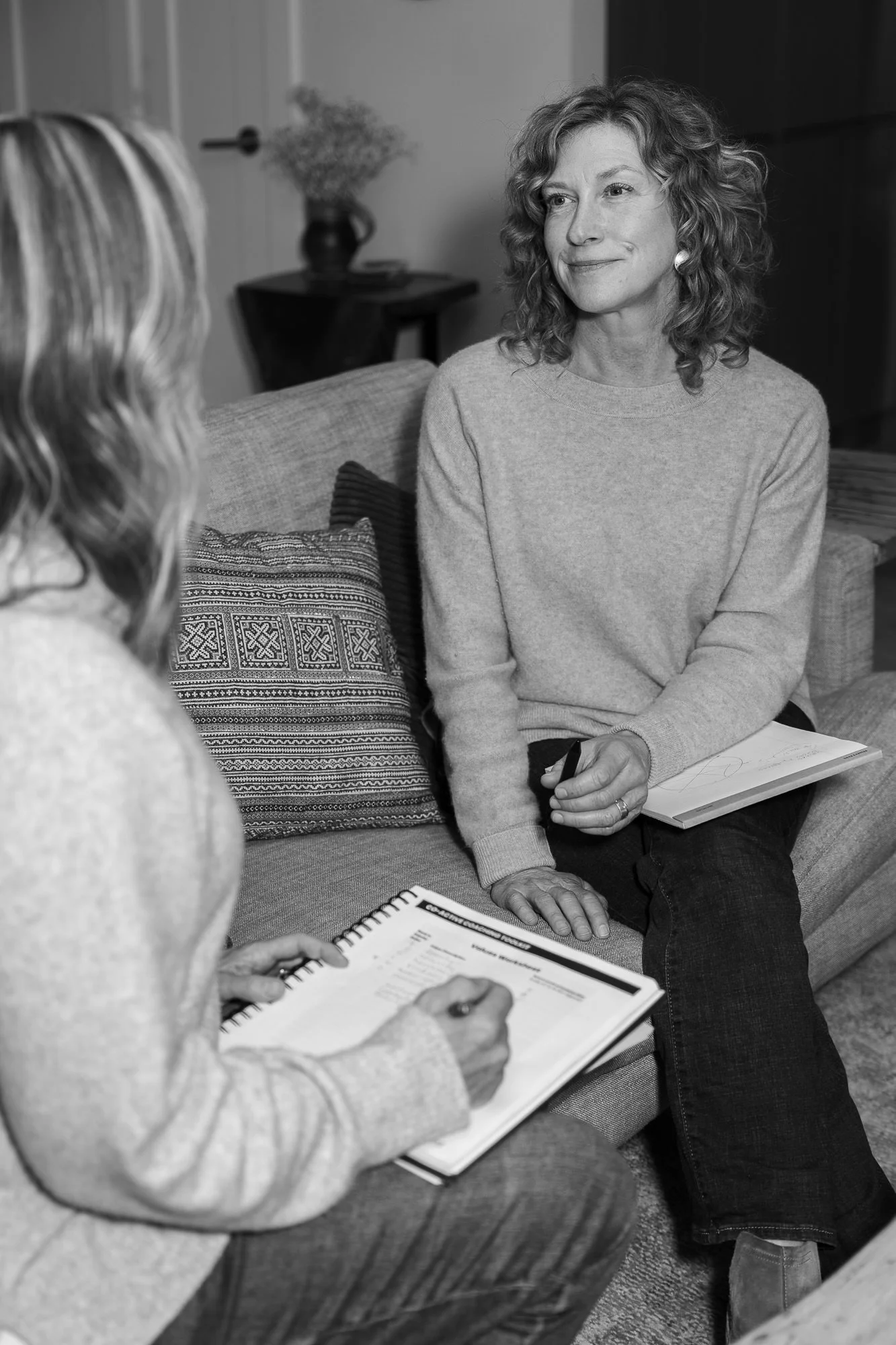
Stacie is a business consultant and leadership coach, focused on helping others align their values, strategies, and leadership for long-lasting impact. Her approach is rooted in curiosity, directness, and adaptability with each client engagement.
While Stacie is a coach and I am an artisan, we approach our work in a similar manner. Not by imposing our will on another, but rather by reading what's already there. The history, the flow, the places where something difficult happened — all indicate where direction changed in response to pressure.
Resilience over time. Strength through decision.
Stacie’s work is rooted in authenticity and a deeply human touch.
In a beautiful coincidence, so is mine.
The Possibility
When Stacie reached out about repurposing their stored wood into functional art, it wasn't simply an inquiry about furniture.
It was a request for something that could hold the full complexity of lives well-lived — hers, her husband's, their lives together, the storied slabs — and make it beautiful without pretending any of it had been easy.
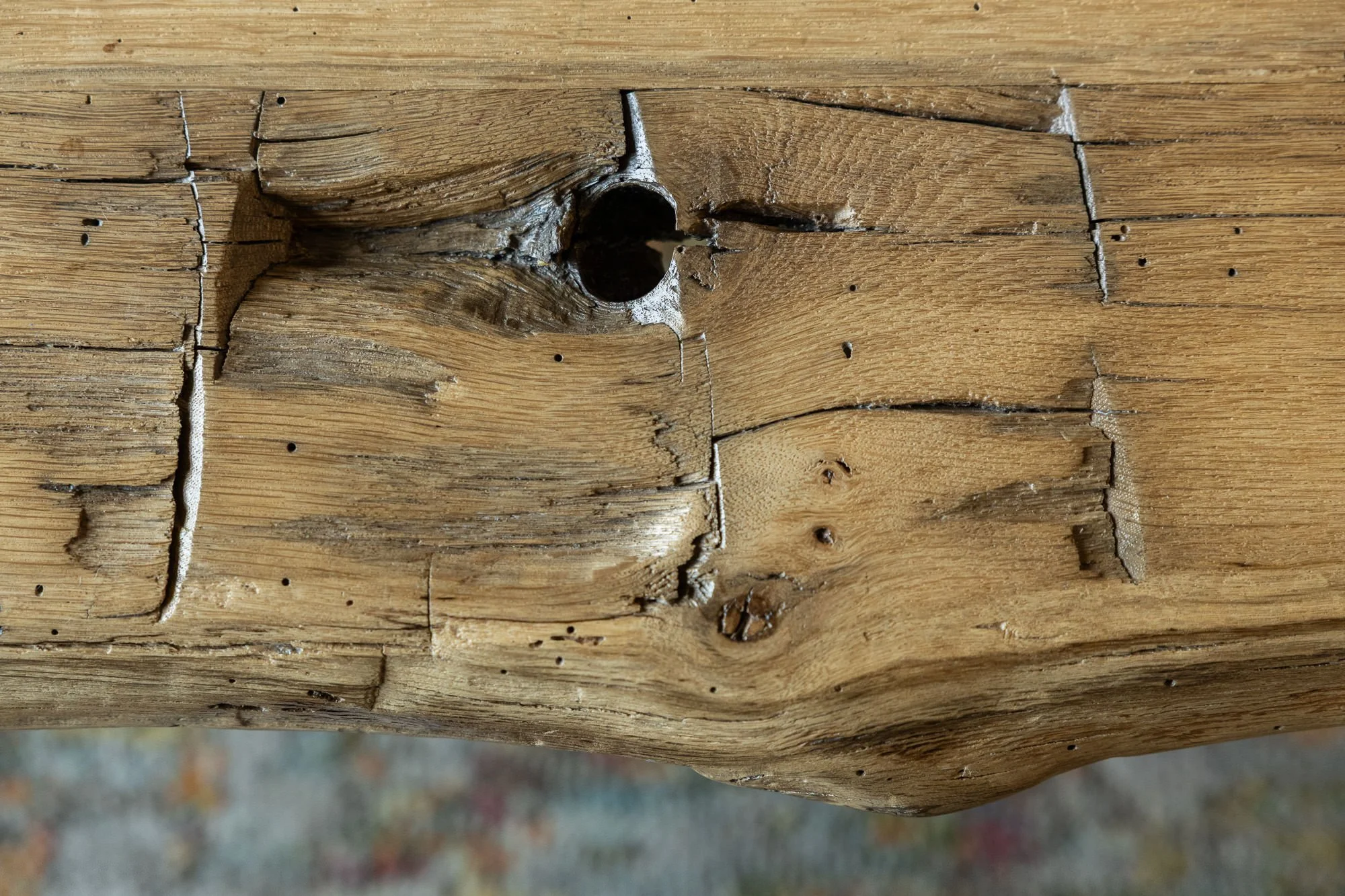
A hand-hewn beam carries evidence of human hands in a way that milled lumber simply doesn't. The tool marks. The slightly uneven surfaces. The places where the grain runs wild because the craftsman followed the tree rather than forcing it into compliance.
Their reclaimed wood had knots, insect tunnels, and voids where the wood had opened over time.
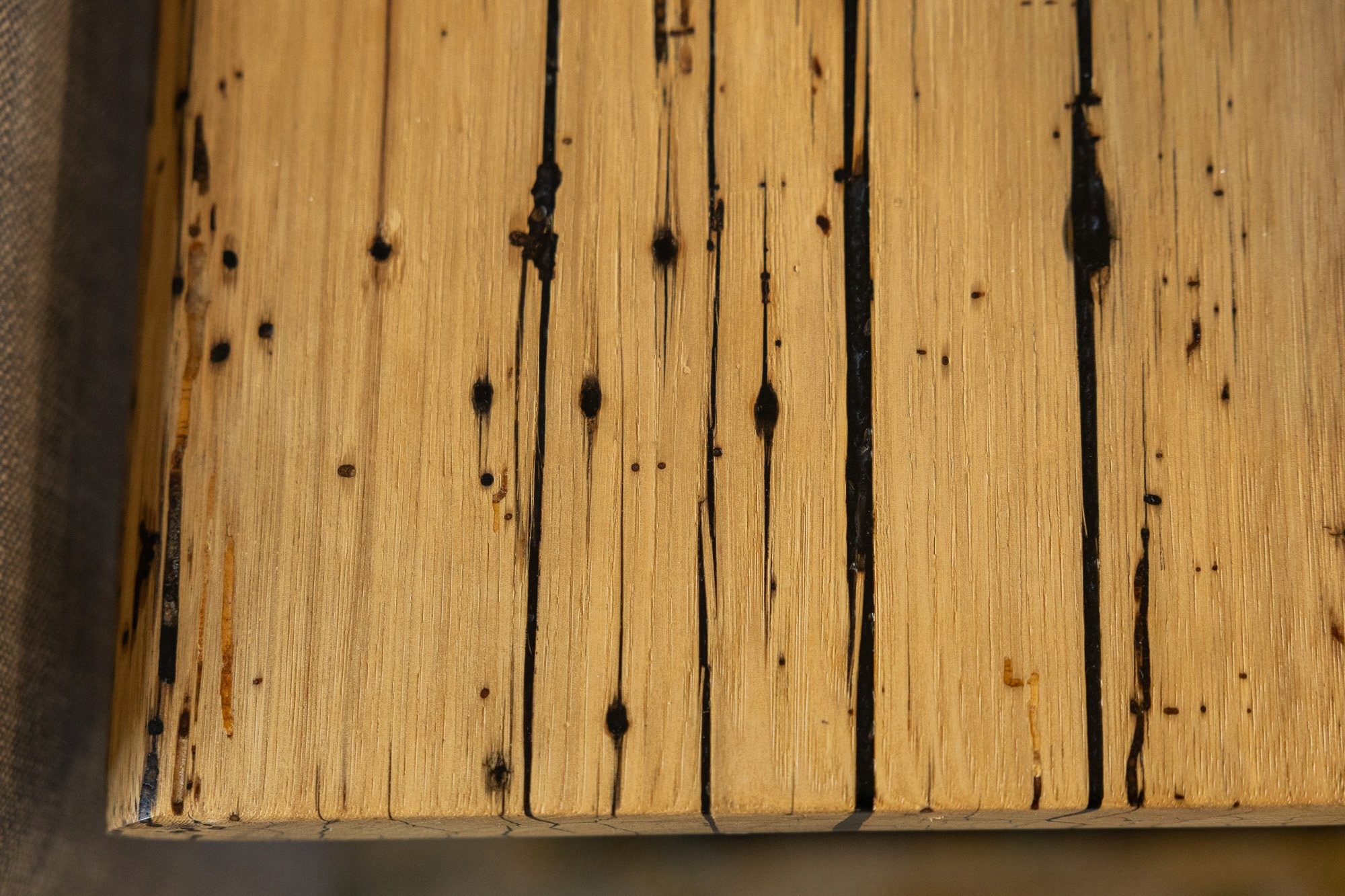
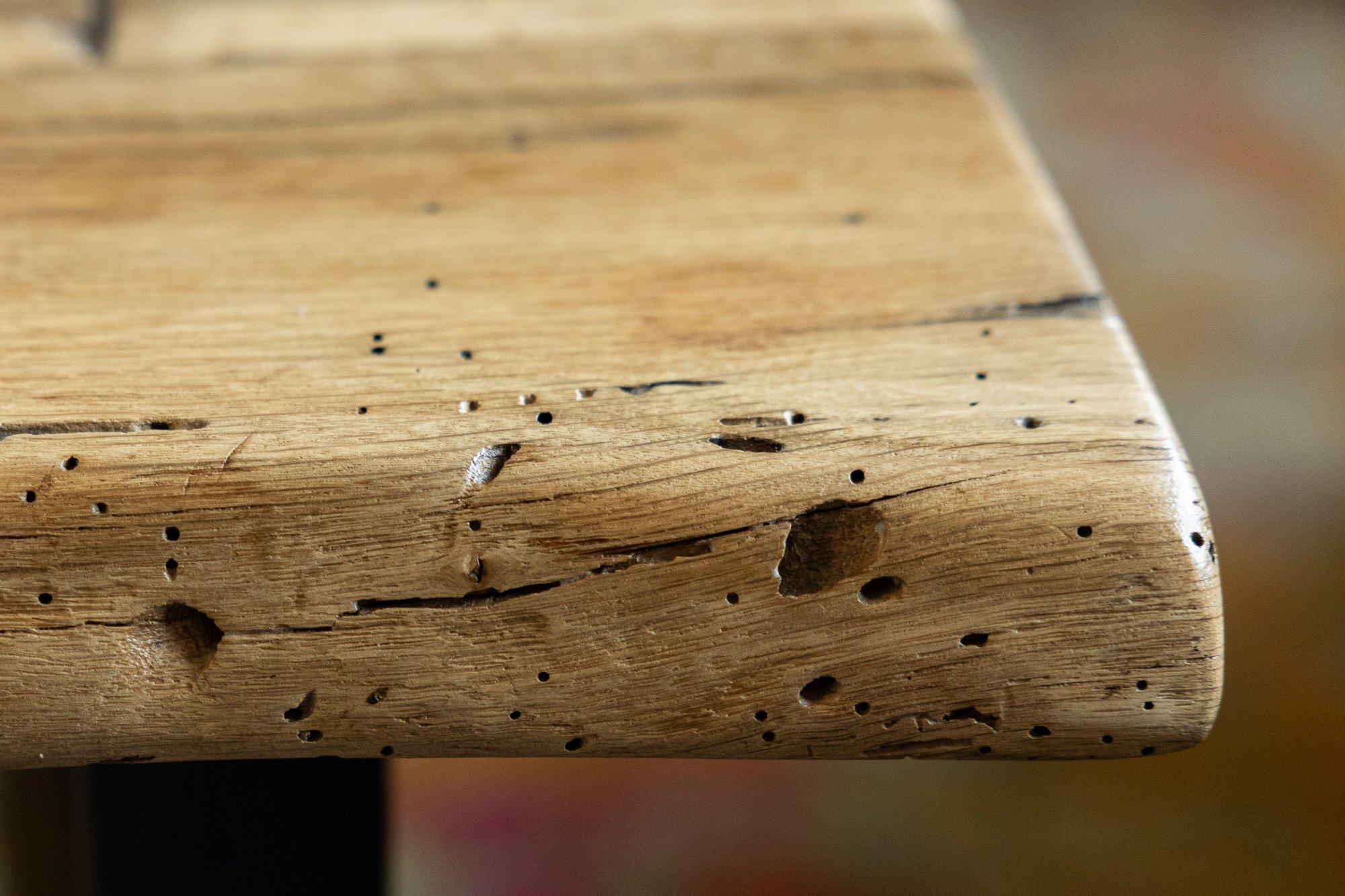
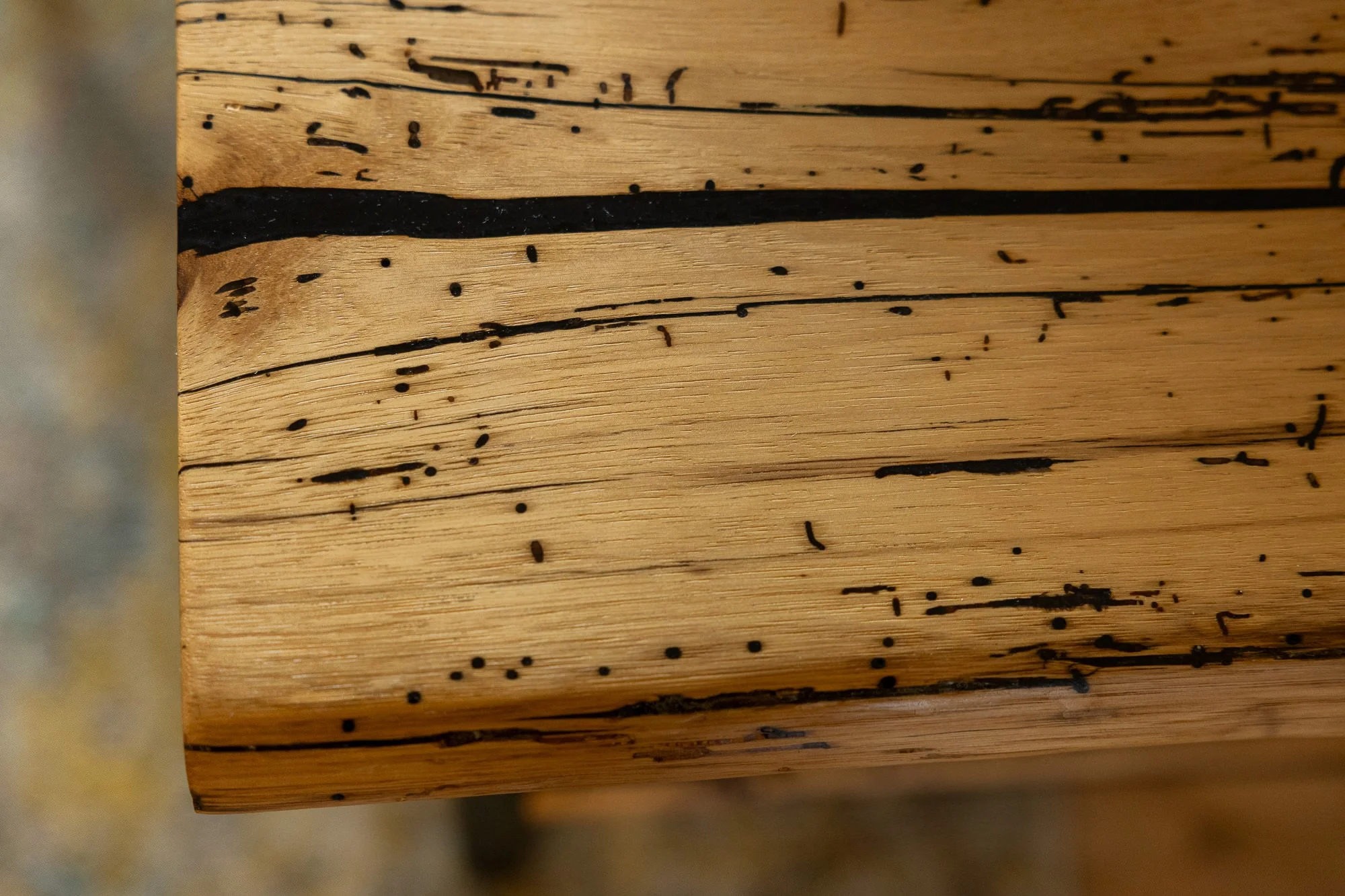
To some, these characteristics can read as imperfections. Defects. Reasons to choose something else.
To me, they are the whole point.
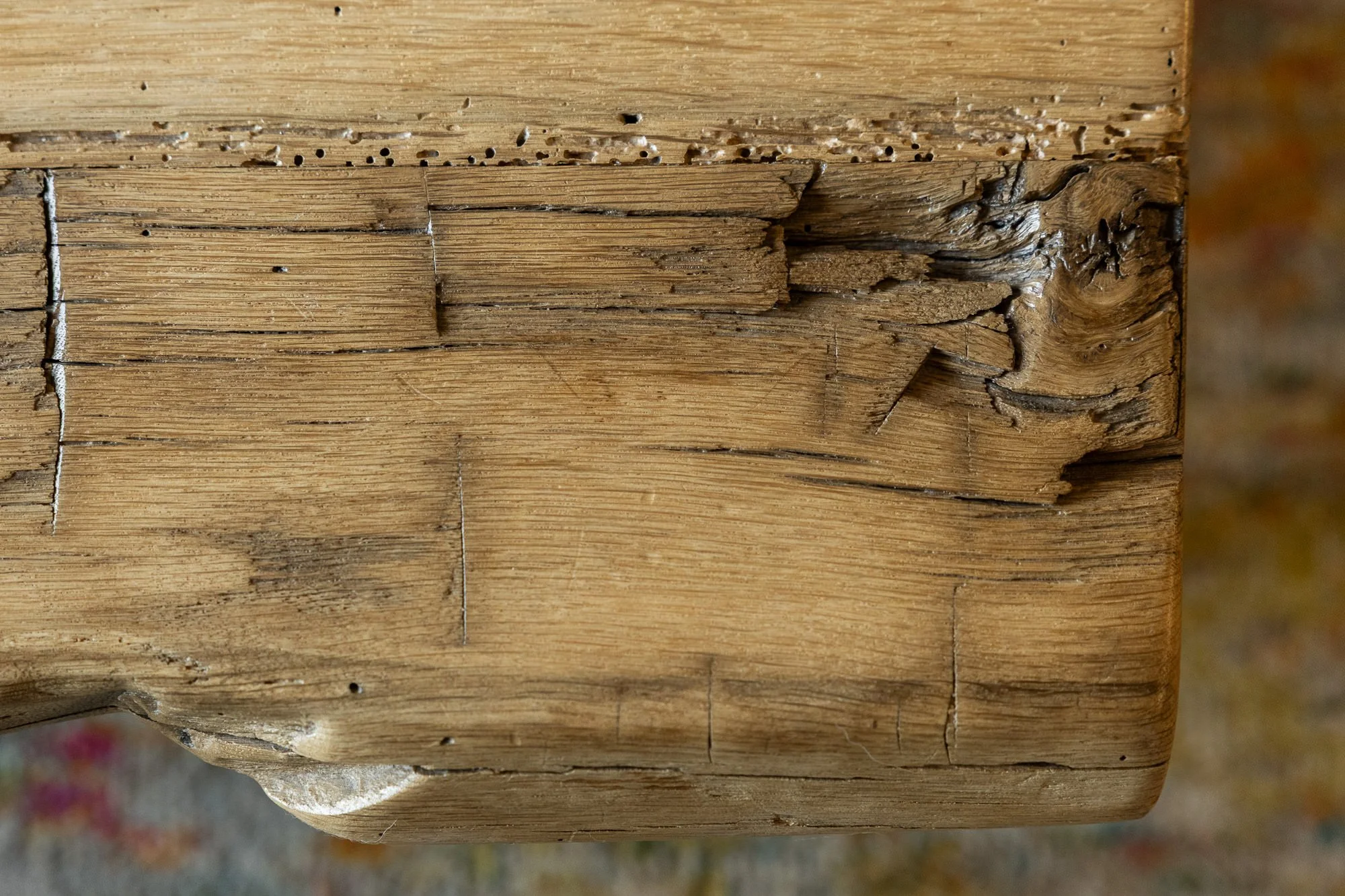
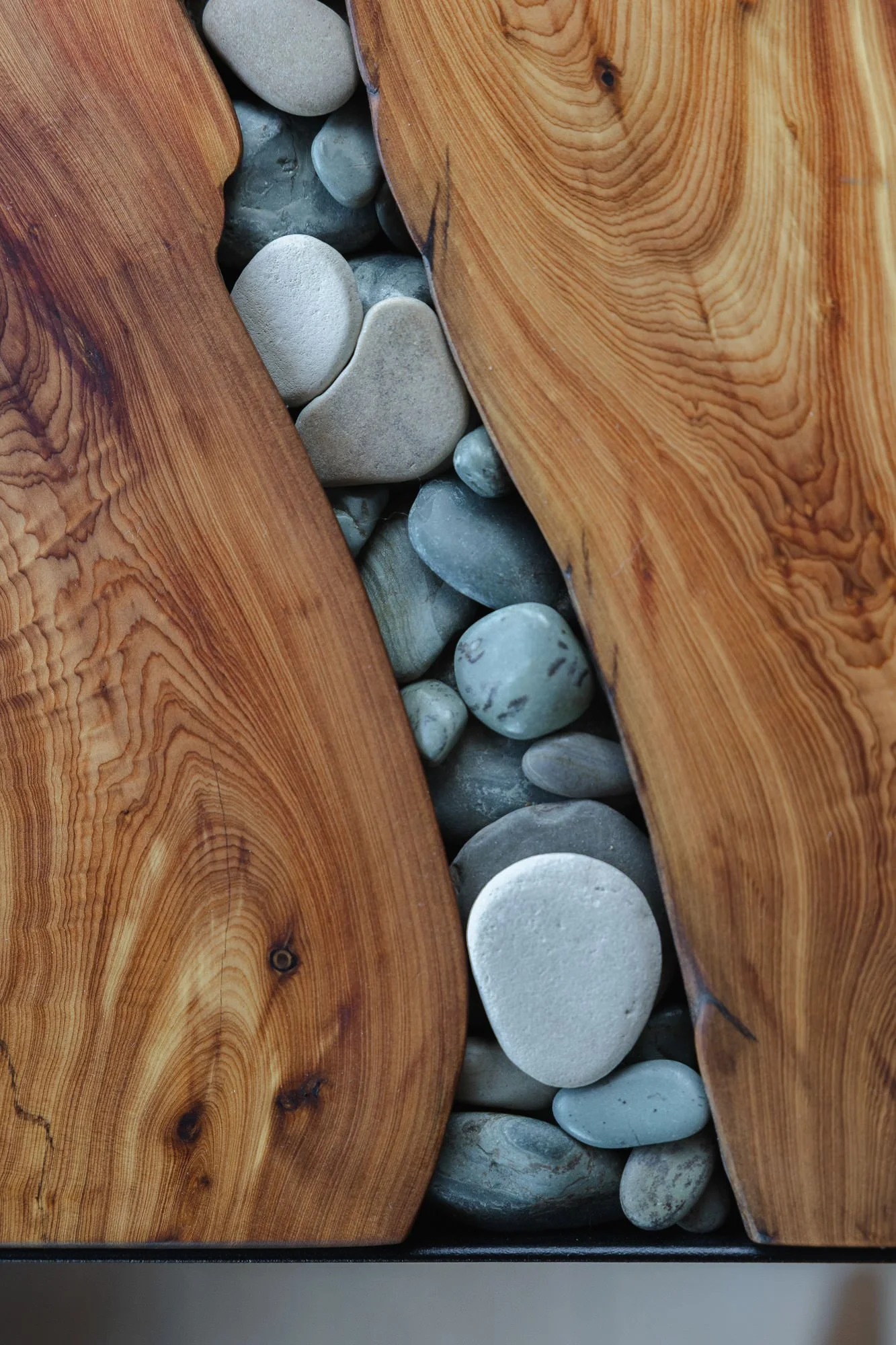
A knot is where a branch once lived — where the tree extended itself outward, reached toward light, and eventually let go. A void exists where the wood moved around something it couldn't absorb, creating negative space that holds its own kind of presence. A twist happens under decades of pressure.
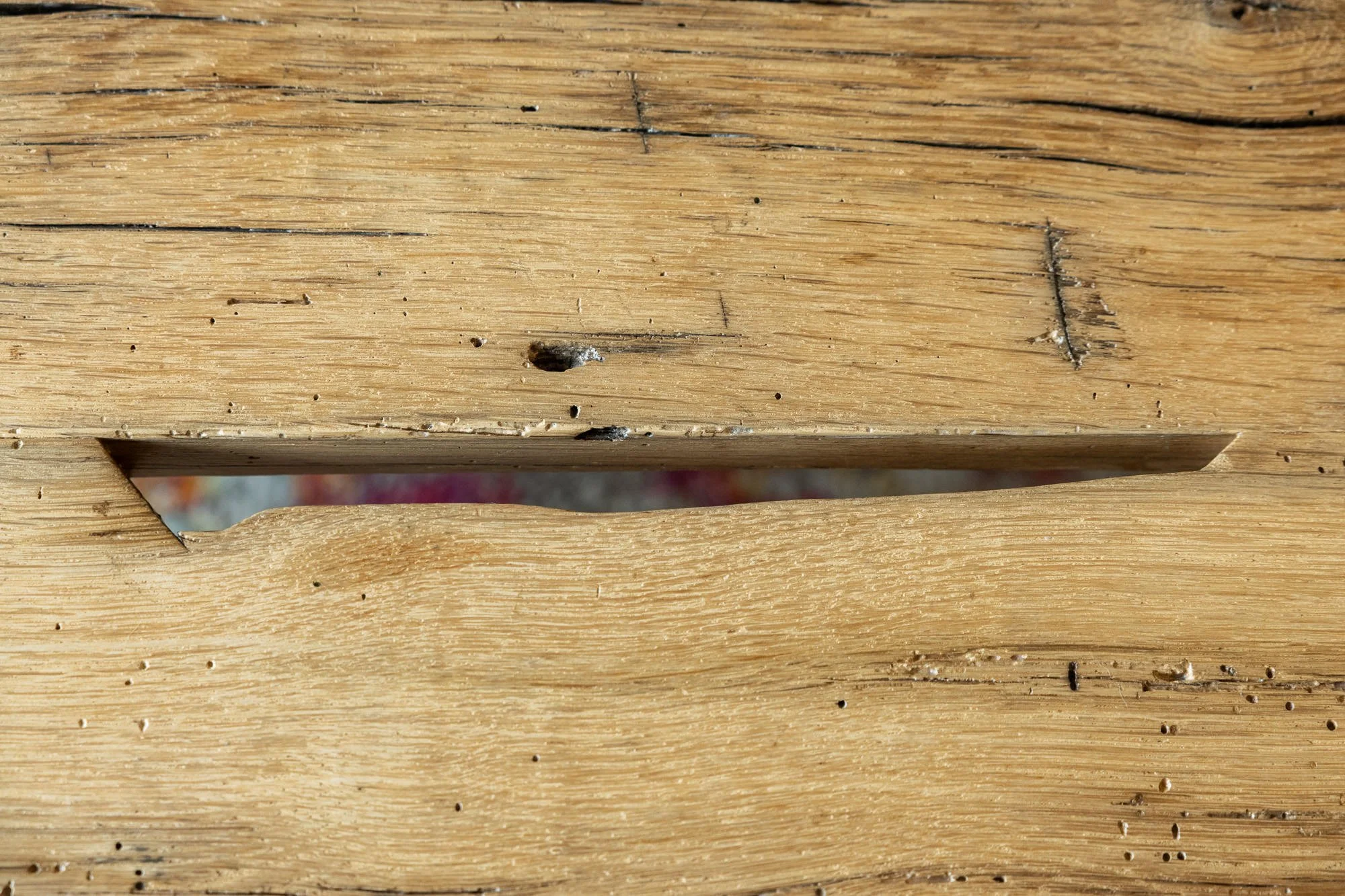
I think about wood the way I think about people. Both grow slowly. Both bend under pressure. Both carry the record of every hard season in their body. The tight grain where growth slowed during times of scarcity. The scar where a wound healed.
It all tells a story.

Trusting the Process
When I stood before their reclaimed wood, I didn't see problems to solve, but rather lives to honor.
And, what made this creative process unique wasn't just the material.
It was Stacie.
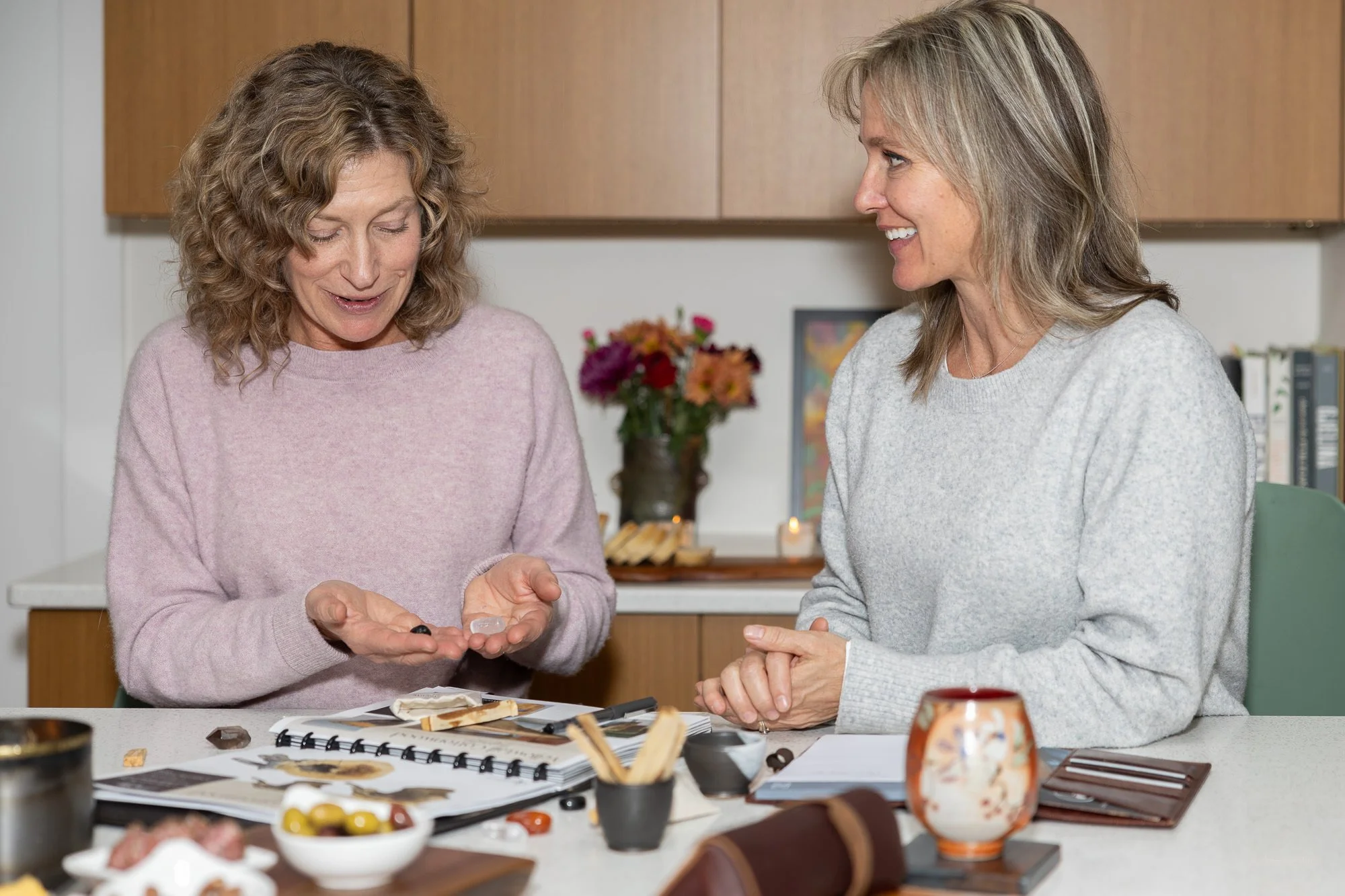
Oftentimes, when people see the knots and voids up close, they feel an instinct to smooth them over — to fill, to cover, to make the surface uniform and legible. It's a deeply human response. We are conditioned to equate beauty with flawlessness, and flawlessness with safety.
Stacie never flinched.
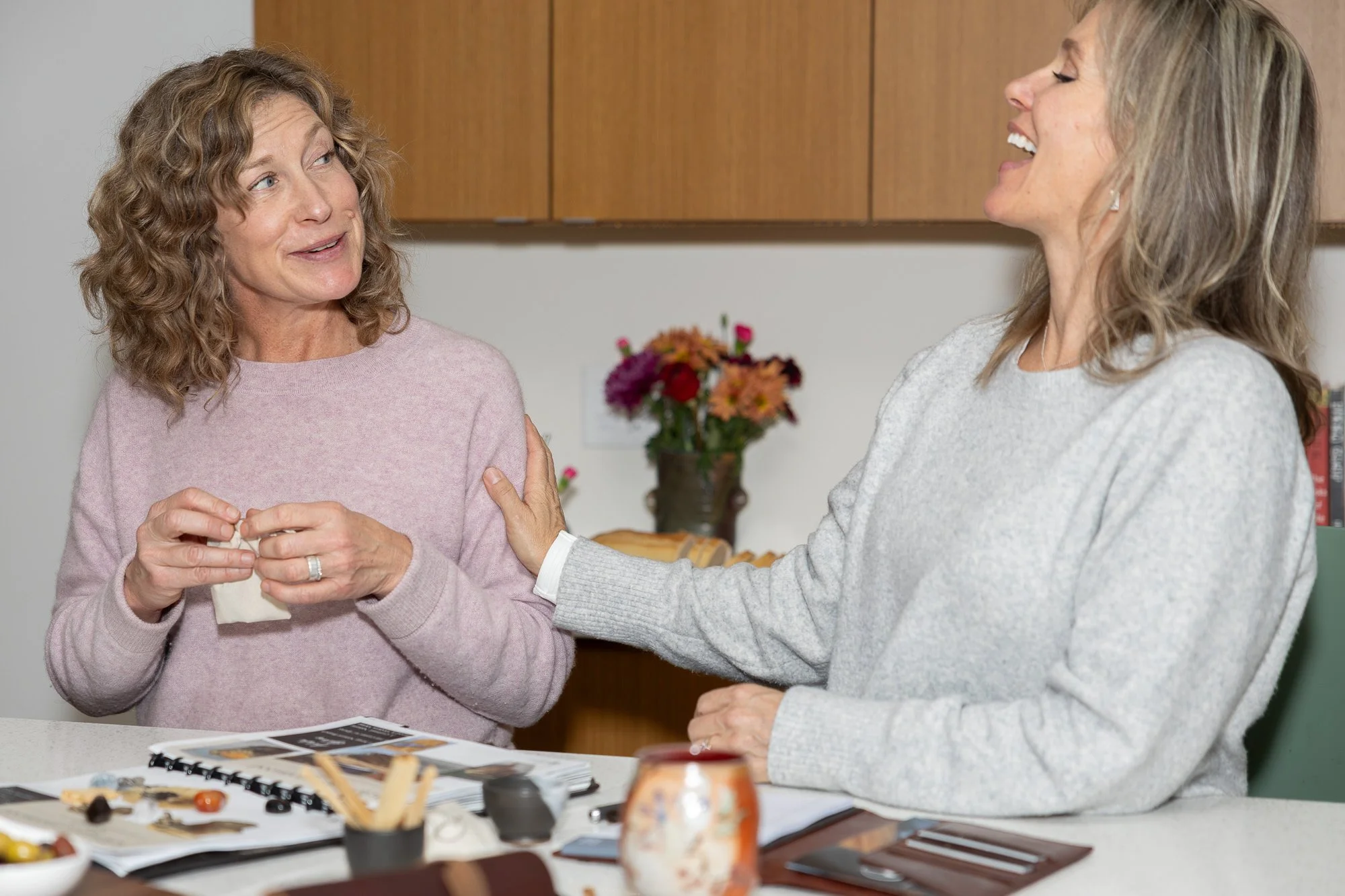
From the first conversation, she embraced what the wood was — not what it might pretend to be. She asked questions rooted in genuine curiosity. And she let go of the result in a way that allowed the creation to become what it needed to be rather than a preconceived idea forced into submission.
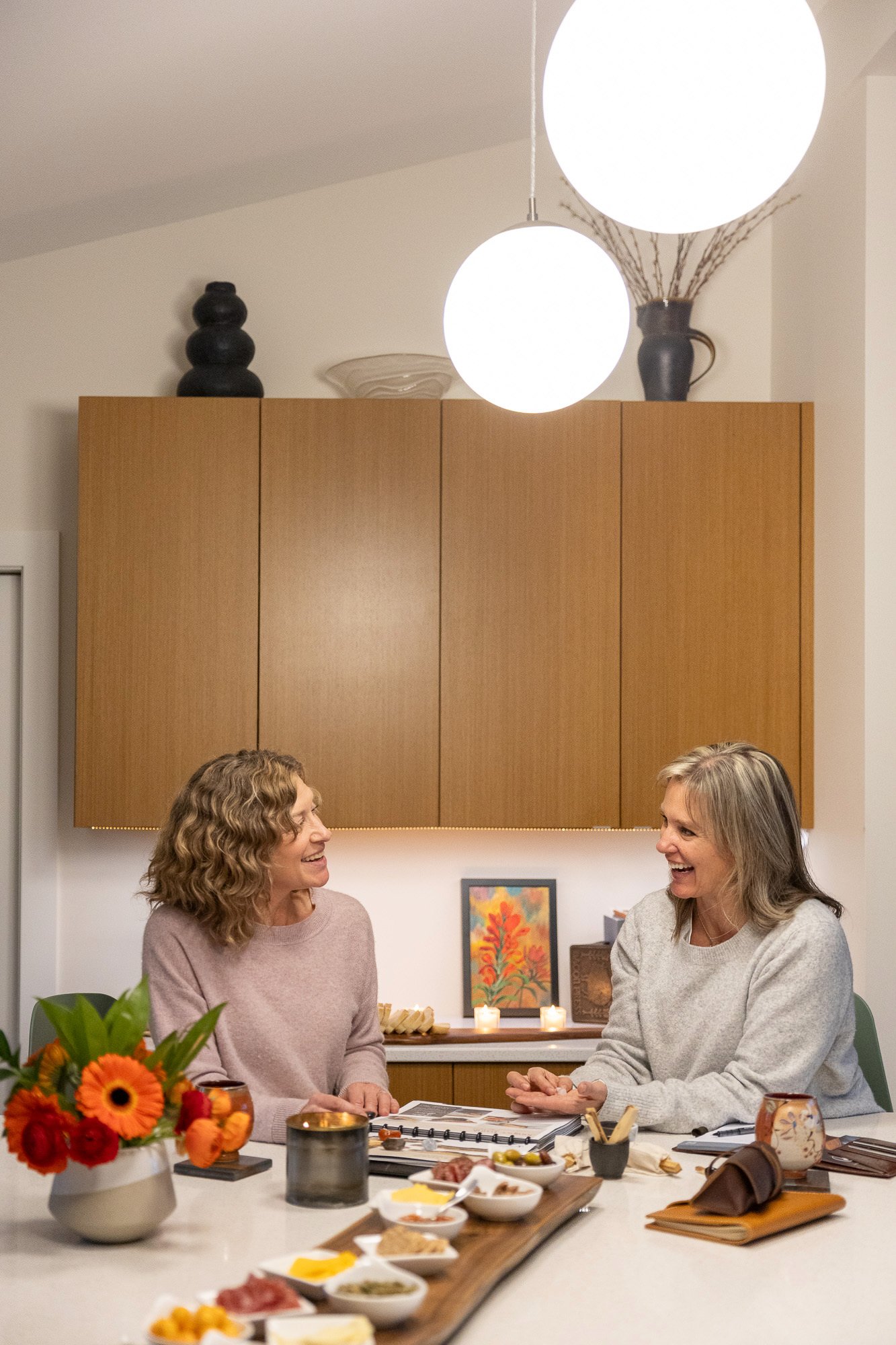
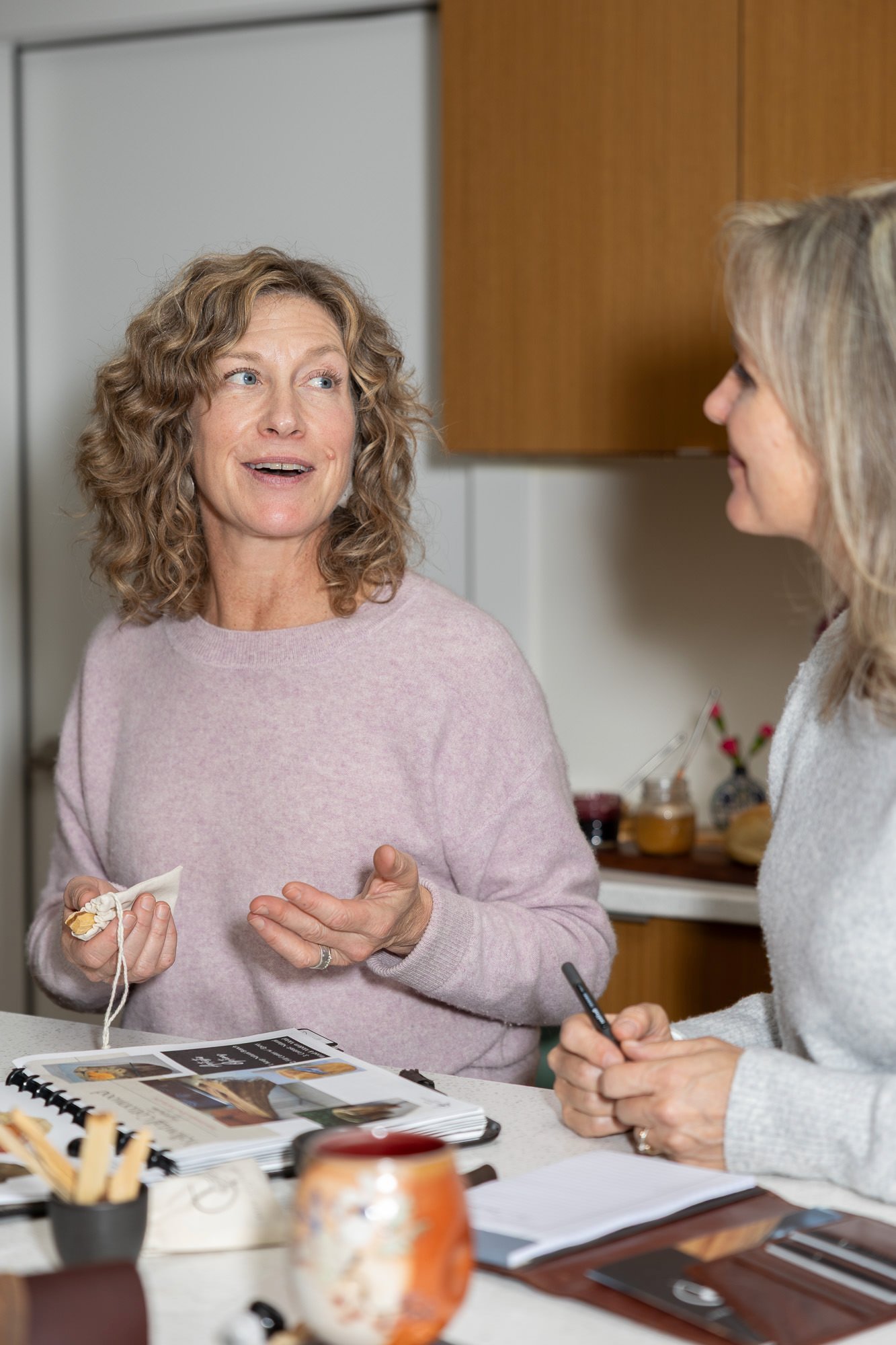
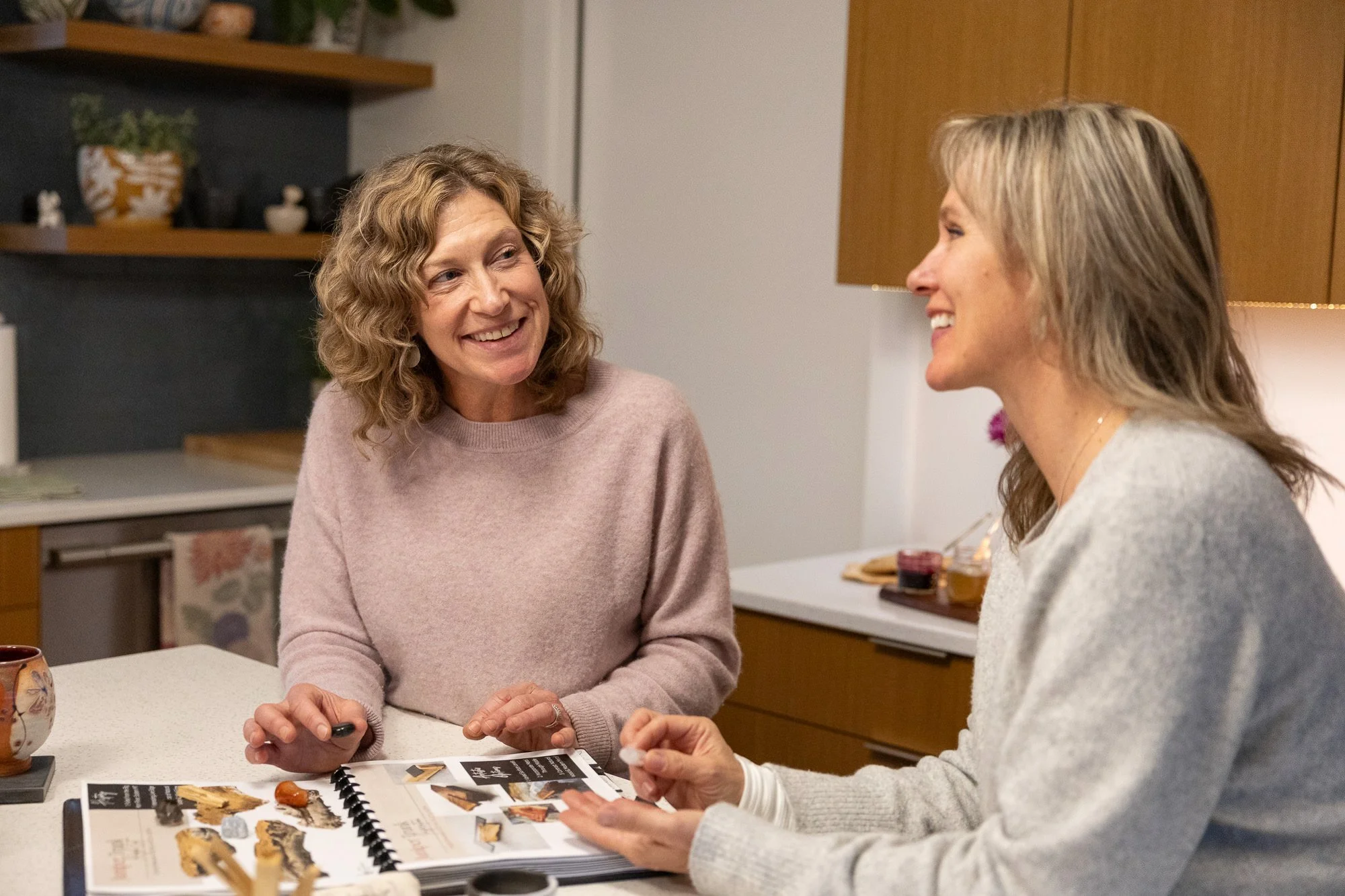

Trusting a creative process with something you cherish is an act of genuine courage.
It requires the same thing Stacie asks of her clients — the willingness to move through meaningful transformation without knowing exactly where they'll land, and the belief something beautiful will emerge.
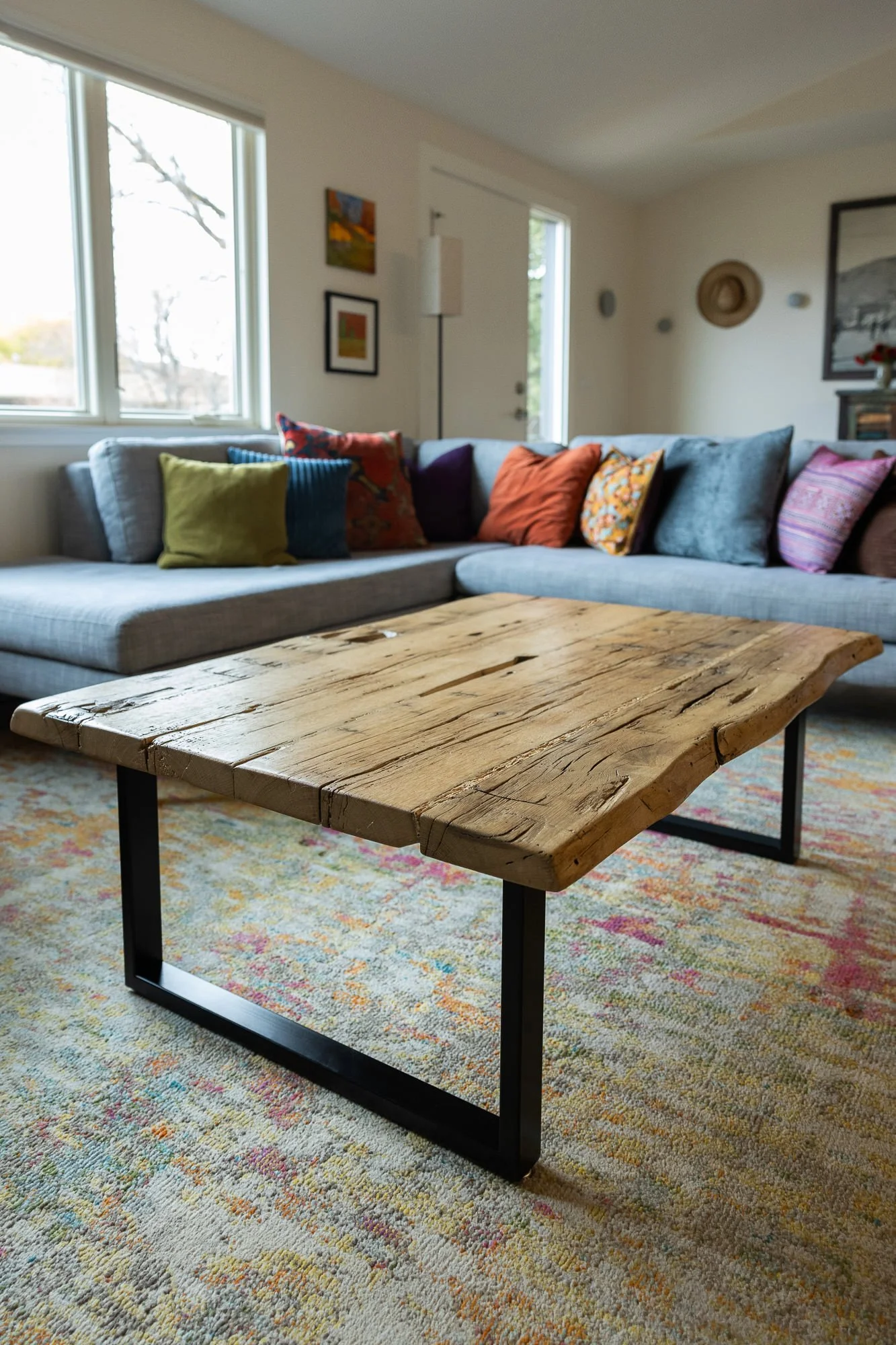
The initial idea of a table led to a array of creations utilizing the additional wood combined with exponential ideas.
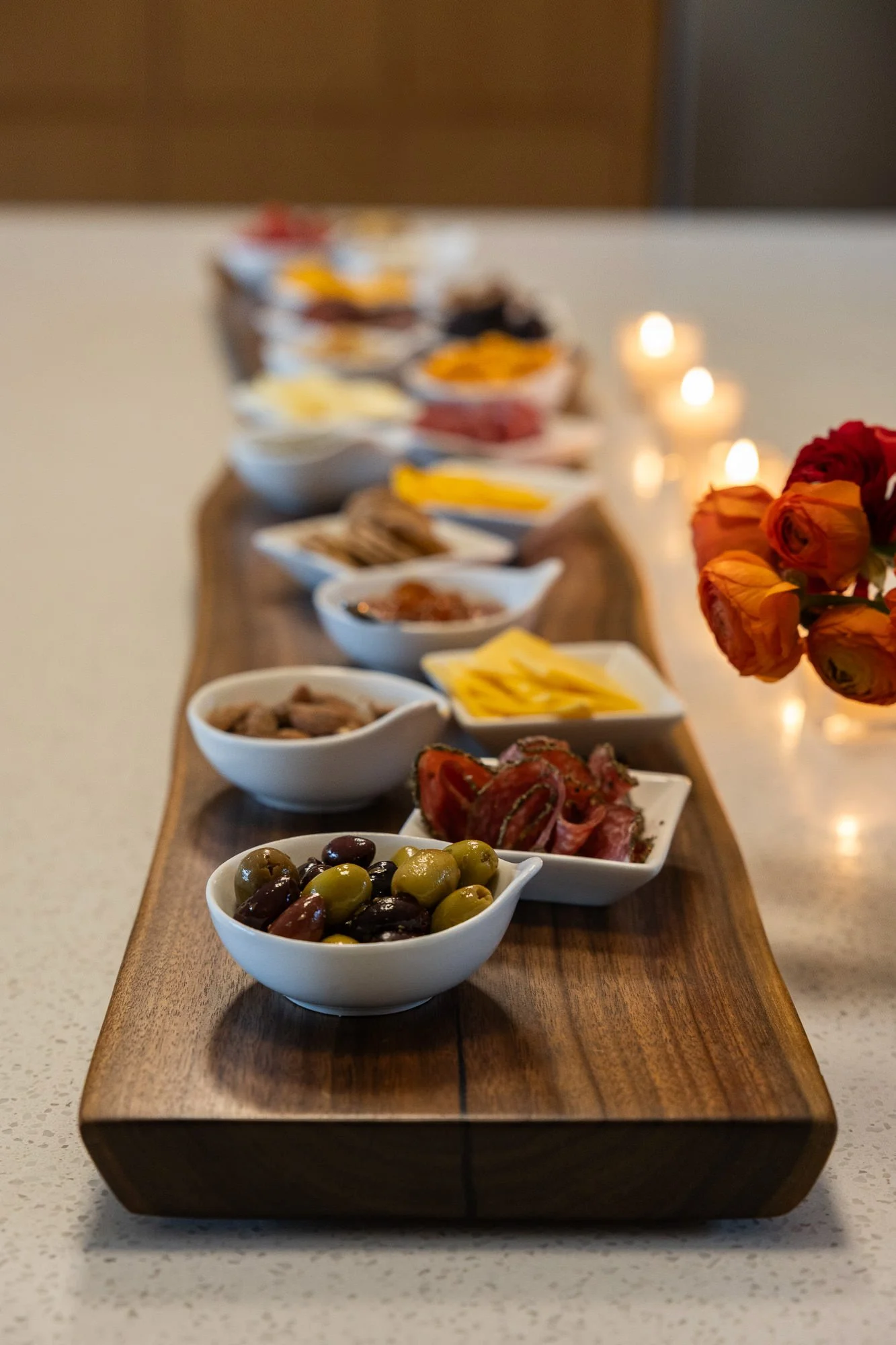
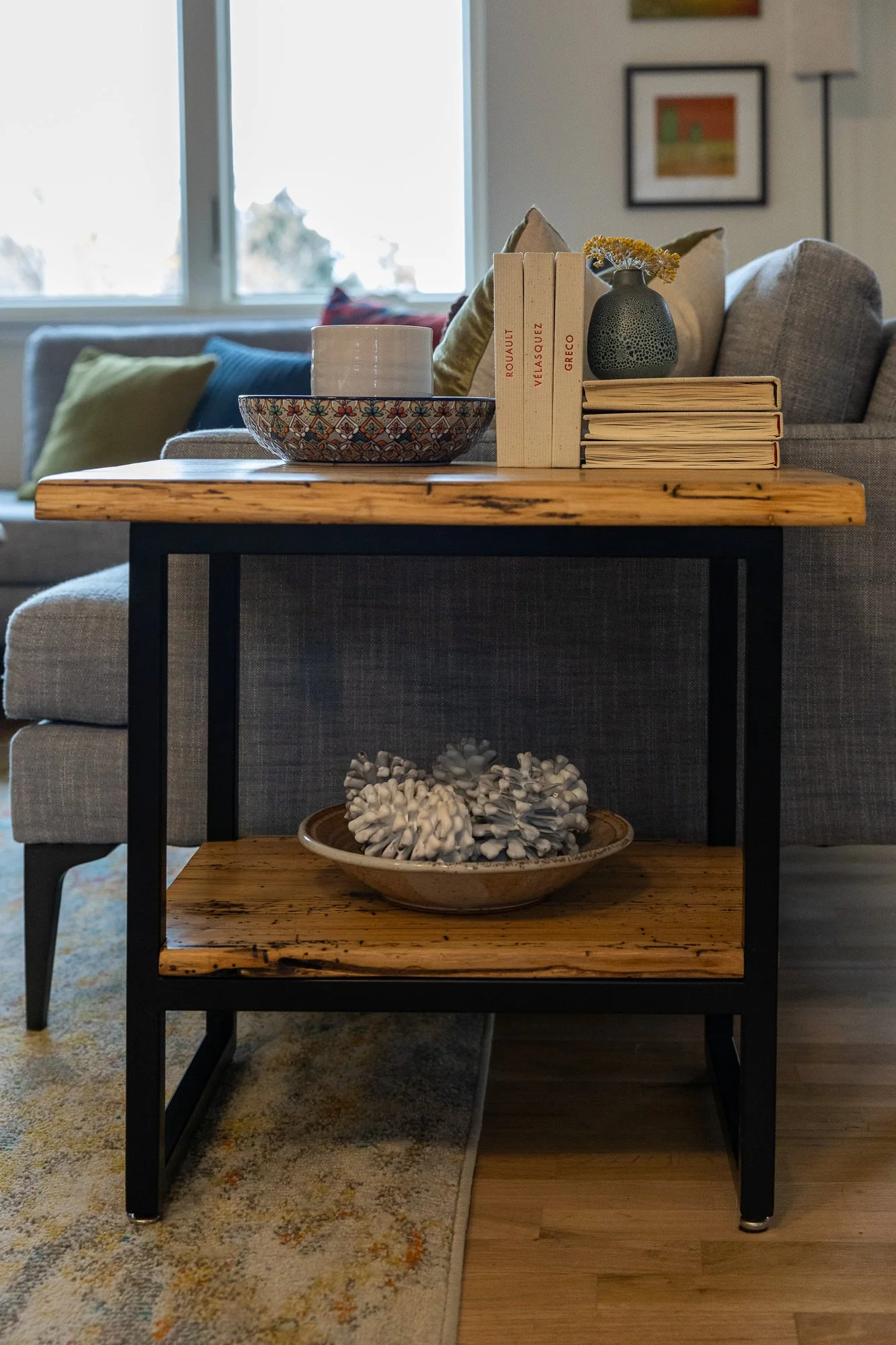
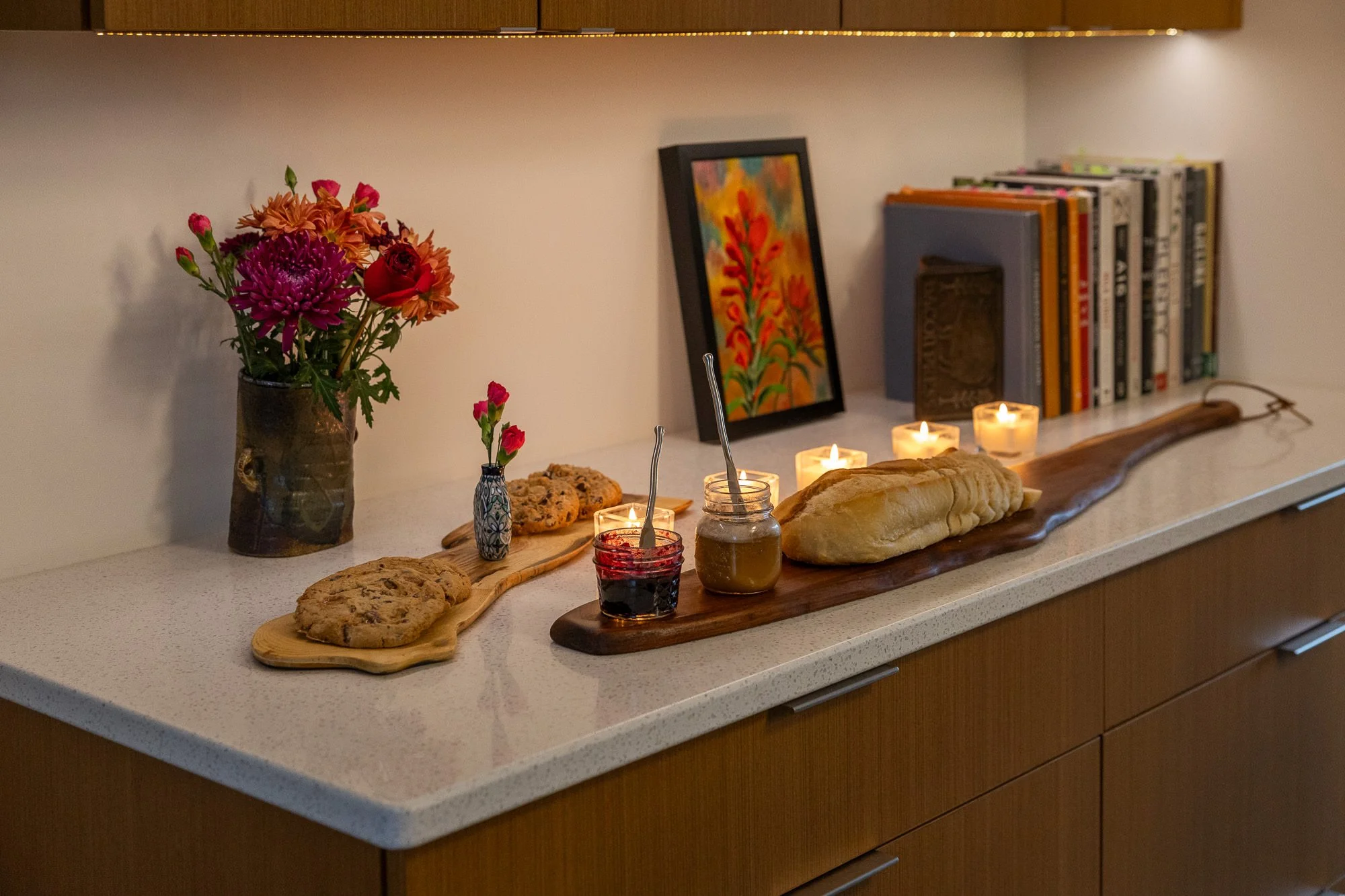
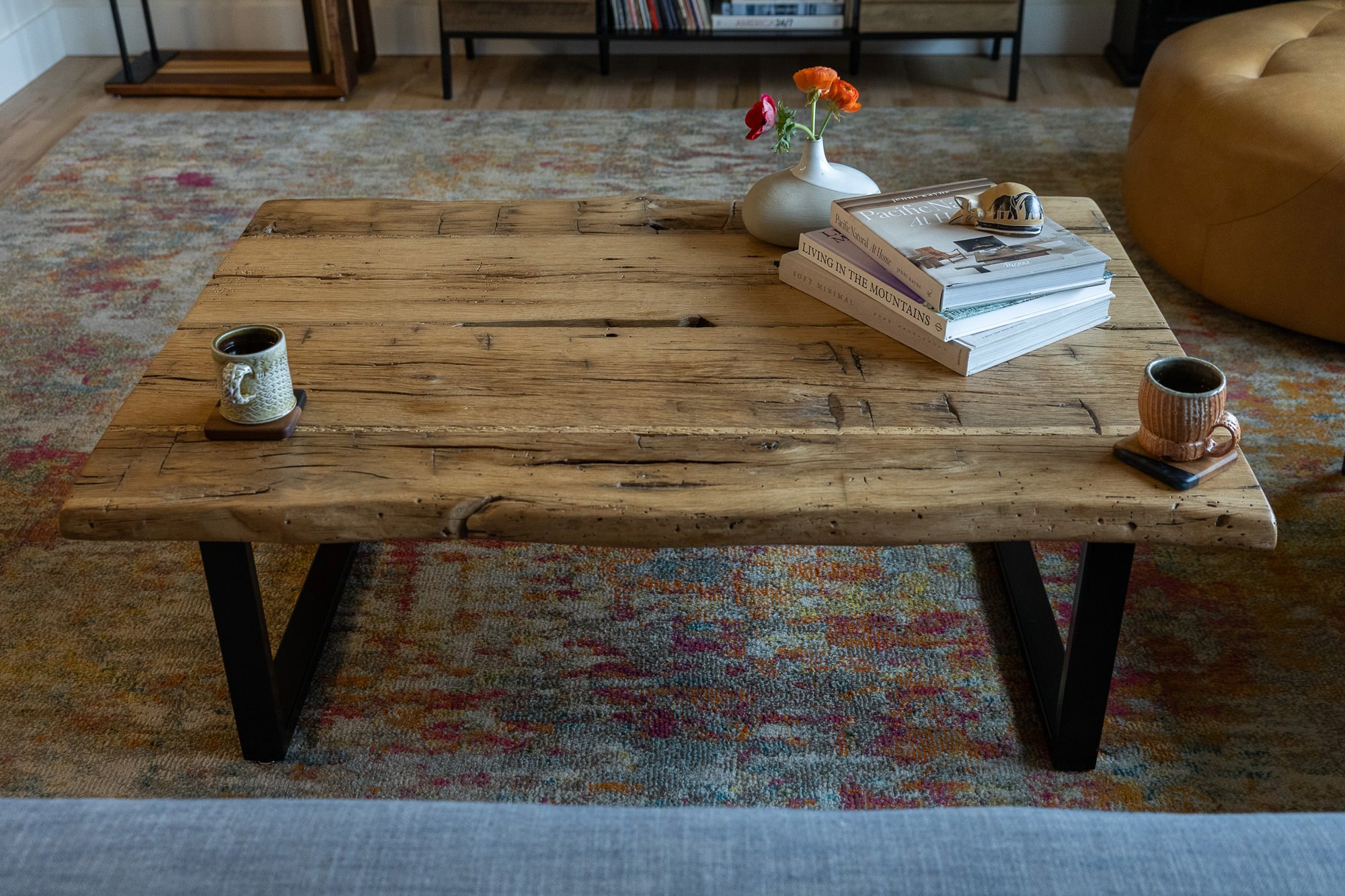
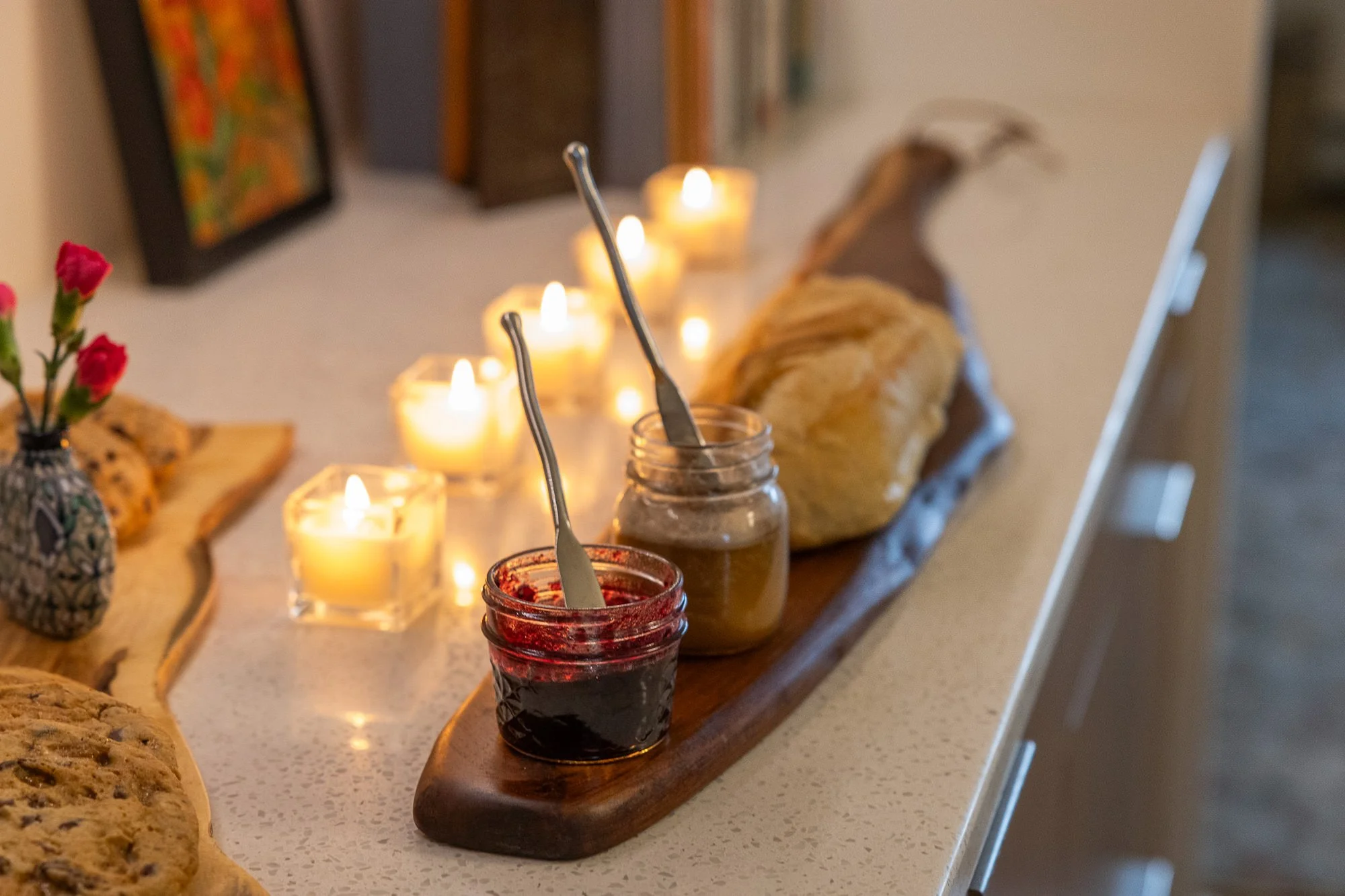
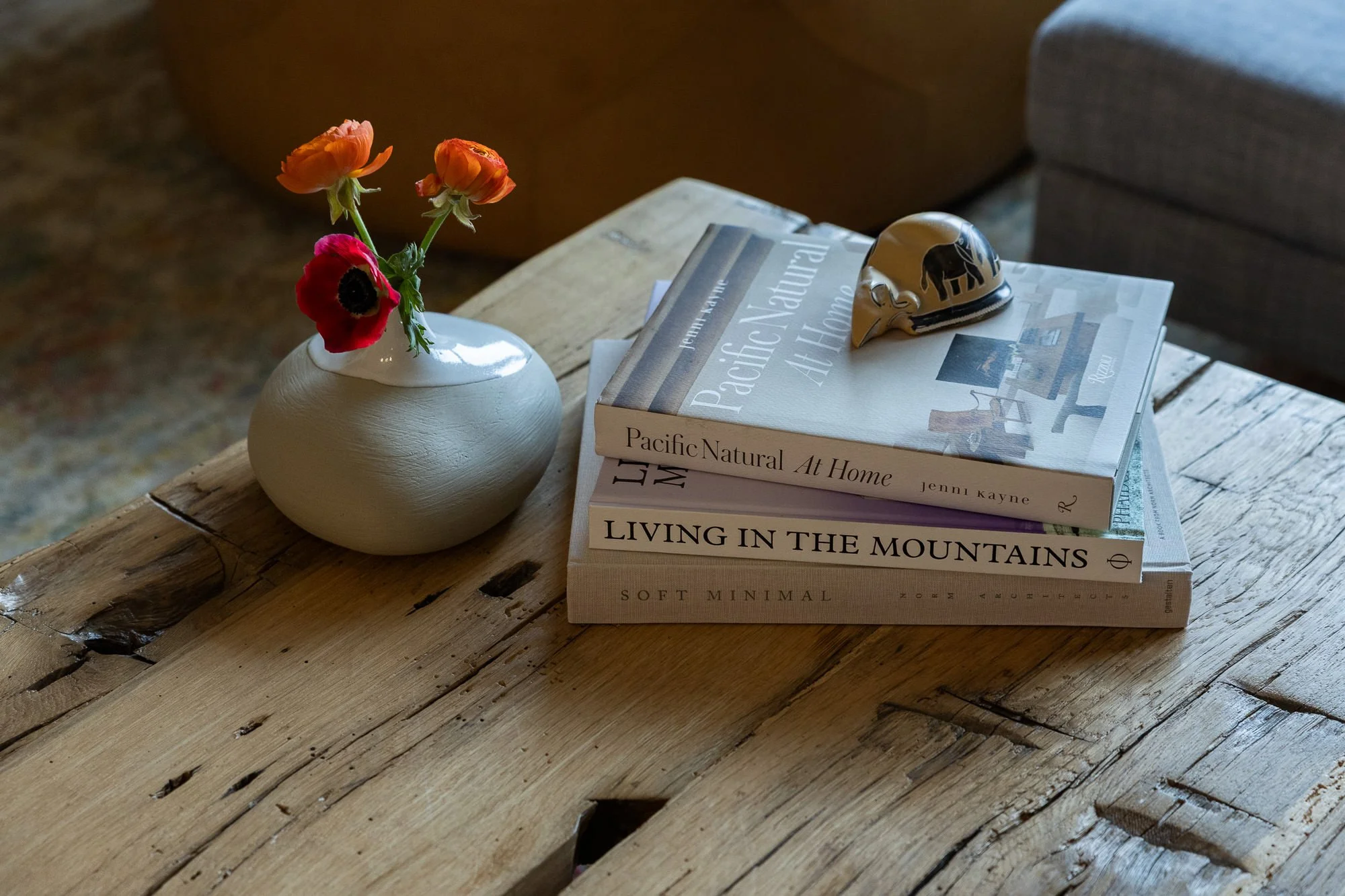
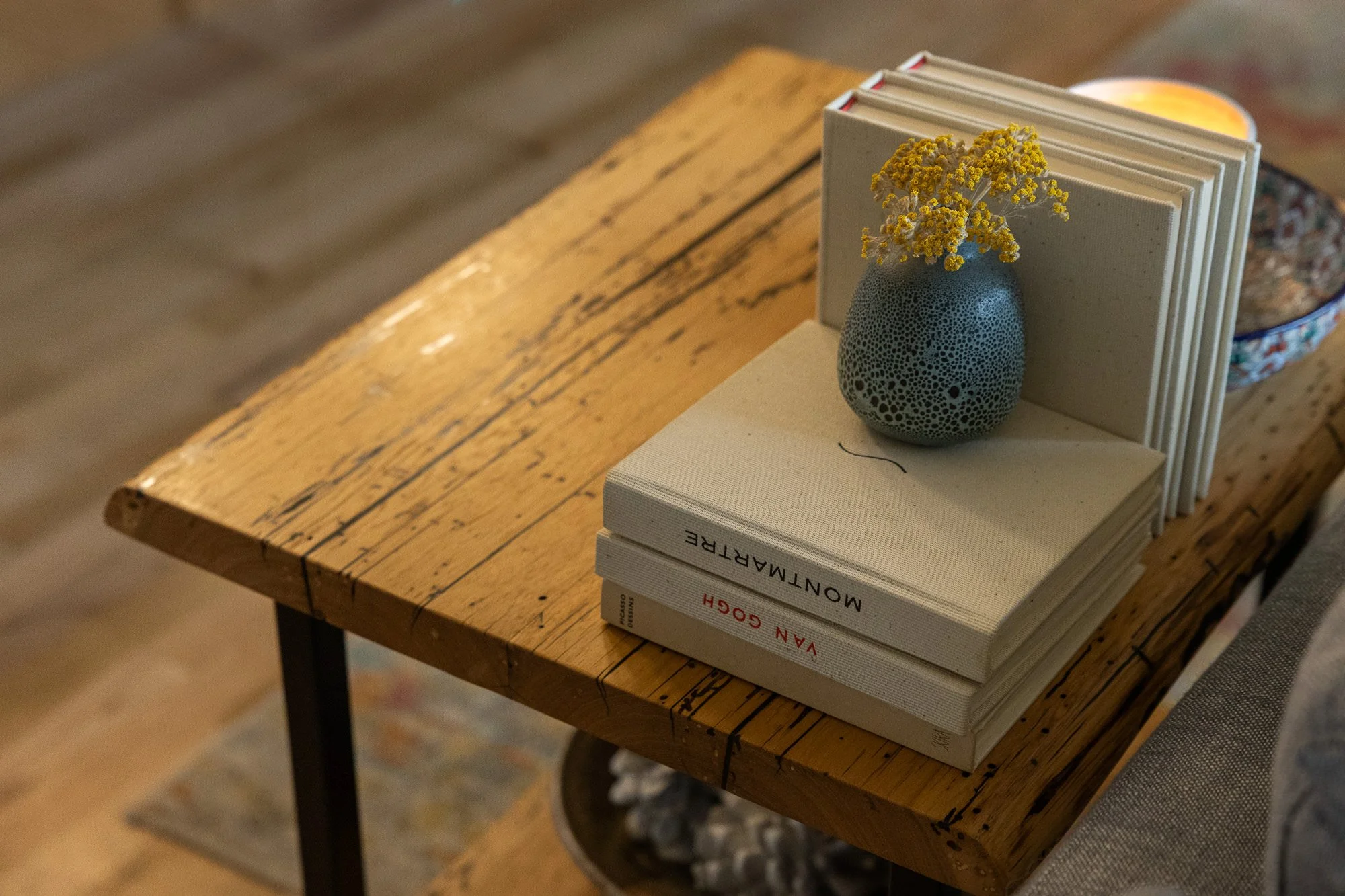
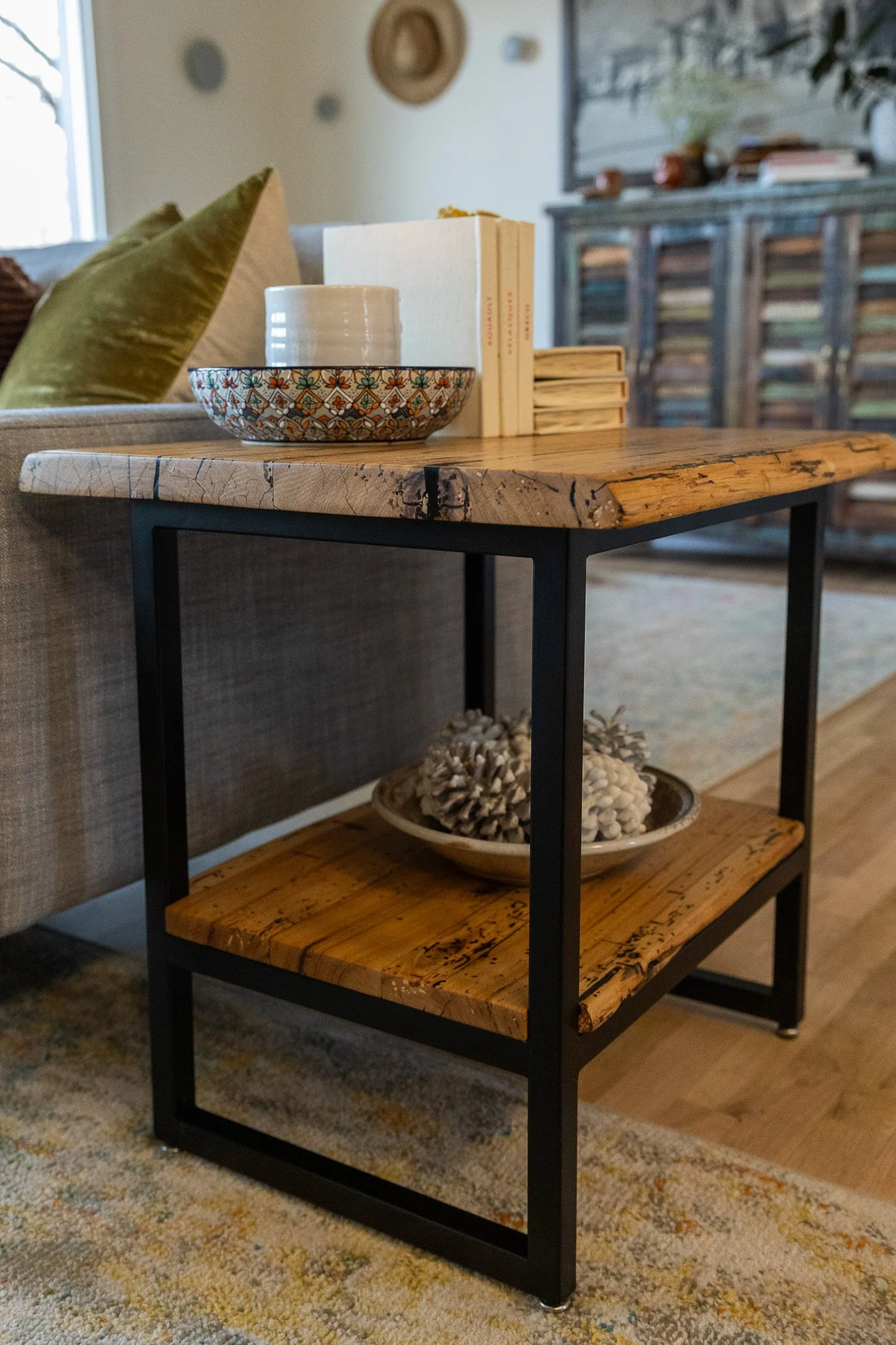
The Moment
As Stacie saw the finished pieces, she was visibly moved. I've delivered enough pieces to know that the response in the first few seconds is the truest one — before the gracious words, before the photographs, before the considered evaluation. In those first few seconds, a person either draws an instinctive breath or they don't.
Stacie inhaled deeply.

That breath, an inhale of reprieve or an exhale of release, is what I'm creating toward.
Functional art that carries its history visibly, without apology — and, asks you to carry yours the same way — confirming something you already knew about yourself but didn’t know how to express.
The Work of Alignment
A piece of wood is never perfectly straight. Neither is a human life.
The work — whether you're a coach or a maker — is not to impose straightness on something that grew in response to real conditions.
The goal is to find the alignment that was always possible. To read the grain. To honor the knots. To help fill the voids with something that holds light rather than hides absence.
In this case, the story was already intertwined before I touched the first tool. Stacie had been living alongside this reclaimed wood for years, recognizing something in it for which she hadn't yet found words.
My job was simply to reveal what it (and she) already knew — the potential of what could be.
Photography by Kelsey Frey Creative
The People Behind the Piece
-
![]()
A Reflection of You
-
![]()
"Art is Not What You See..."
-
![]()
An Introduction of Old Friends
-
![Core Elements Studio Client]()
The Mark of Something Real